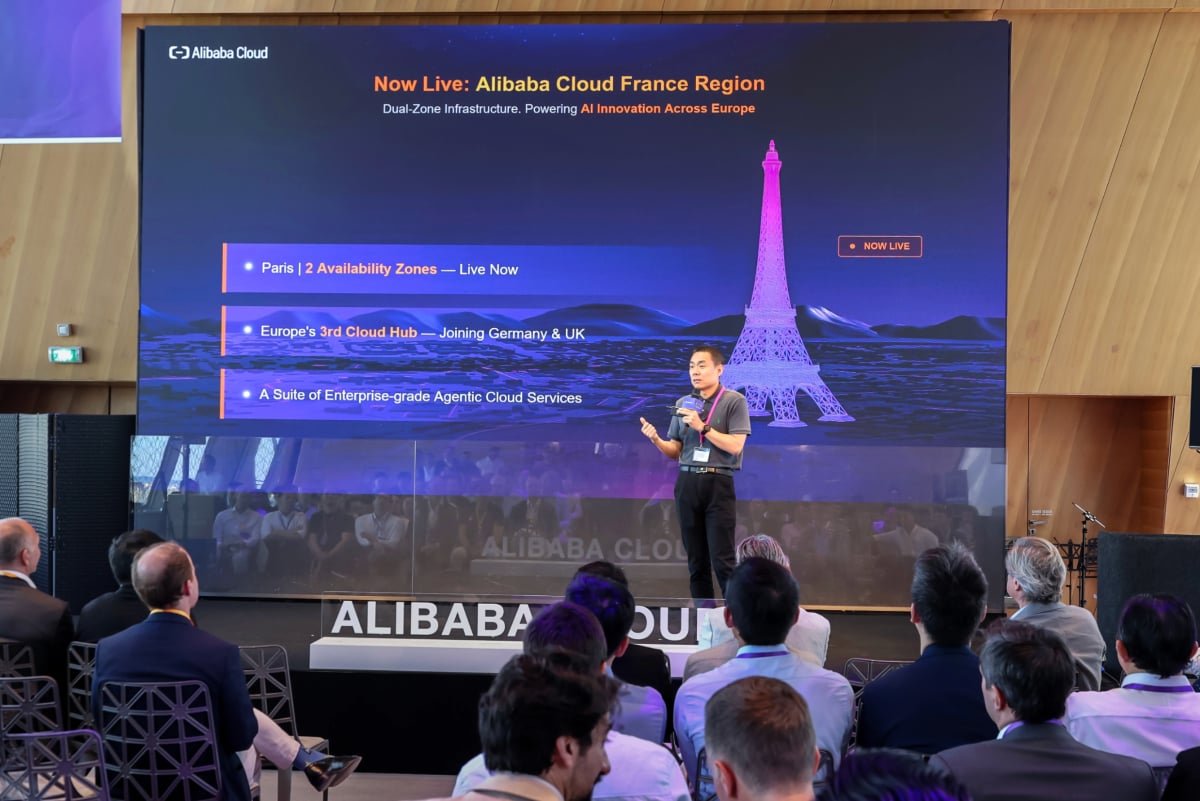
Alibaba Cloud, the cloud computing arm of Alibaba Group, has officially expanded its European infrastructure by launching two new availability zones in Paris. This strategic move aims to bolster the company’s ability to support European enterprises as they navigate increasingly stringent demands for data sovereignty, service resilience, and advanced artificial intelligence infrastructure. By establishing these local data centers, Alibaba Cloud seeks to provide lower-latency services for French and broader European clients, aligning its regional operations with the local regulatory emphasis on digital autonomy, according to official company announcements.
The expansion comes as European firms increasingly prioritize regional data residency to comply with the General Data Protection Regulation (GDPR). By maintaining data processing and storage within French borders, Alibaba Cloud intends to address the concerns of businesses that are wary of cross-border data transfers. This development represents a significant effort to compete with established global cloud providers—such as Amazon Web Services (AWS), Microsoft Azure, and Google Cloud—which have long maintained extensive infrastructure footprints across the continent, as reported by Reuters.
Strategic Alignment with European Data Sovereignty
The decision to anchor new capacity in France reflects a broader market trend where European enterprises are seeking cloud solutions that guarantee compliance with local legal standards. Data sovereignty has become a primary concern for the European Union, which has implemented rigorous frameworks to ensure that sensitive information is not subject to foreign jurisdictional overreach. According to the European Commission, maintaining strict control over data processing is essential for the security of both public and private sector entities within the bloc.

Alibaba Cloud’s new Paris availability zones are designed to offer high-availability, fault-tolerant infrastructure. In cloud architecture, availability zones are isolated locations within a region, engineered to remain operational even if one zone experiences a power outage or hardware failure. By deploying these in France, Alibaba Cloud provides local businesses with the redundancy required for mission-critical applications. This infrastructure, as noted by the company in its technical documentation, is optimized to support the high-compute demands of modern AI models and machine learning workflows, which require stable, high-speed connectivity to large-scale data sets.
Meeting the Demand for AI Infrastructure
Beyond traditional cloud hosting, the Paris expansion is explicitly aimed at supporting the rapid adoption of artificial intelligence. As European companies look to integrate generative AI into their operational stacks, the need for robust, geographically proximate GPU-accelerated computing has surged. Many European startups and enterprises are currently seeking to avoid reliance on a single provider, opting instead for a multi-cloud strategy to ensure continuity. The Gartner forecast indicates that global public cloud spending is expected to reach $679 billion in 2024, driven largely by the massive investment in AI and cloud-native application development.

For Alibaba Cloud, the French market serves as a gateway to broader European integration. The company has previously established footprints in other European hubs, including Frankfurt and London, but the Paris location is viewed as a key move to capture the growing French tech ecosystem. By offering specialized AI services—such as ModelScope, an open-source platform for machine learning models—the provider aims to attract developers and data scientists who require flexible, high-performance environments that adhere to local compliance standards.
Competitive Landscape in the European Cloud Market
The European cloud market remains dominated by U.S.-based hyperscalers, which control a significant majority of the market share. However, the push for “digital sovereignty” has created an opening for alternative providers. While Alibaba Cloud is a major player in the Asian market, its success in Europe depends on its ability to prove that its infrastructure is as secure and reliable as that of its Western counterparts. The company has invested heavily in international certifications, including ISO/IEC 27001 and 27017, to demonstrate its commitment to security standards recognized by European regulators, according to the Alibaba Cloud Trust Center.
Analysts observe that the primary challenge for non-European providers is not just technical capability, but the perception of risk regarding data access laws. To mitigate this, Alibaba Cloud has focused on transparency and local partnerships. By collaborating with local French service providers and system integrators, the firm is attempting to embed itself into the local business fabric, making it easier for French companies to adopt their services without fearing regulatory friction.
What Happens Next for European Enterprises
Looking ahead, the focus for European enterprises will likely remain on the “interoperability” of these cloud services. As businesses adopt AI-driven tools, they are increasingly concerned about “vendor lock-in,” where moving data between providers becomes prohibitively expensive or technically impossible. The European Union’s Data Act, which came into force in early 2024, includes provisions specifically designed to facilitate switching between cloud providers, aiming to create a more competitive and open market for European users.

For organizations considering a shift to or an expansion within the Alibaba Cloud ecosystem, the next step involves reviewing the specific service level agreements (SLAs) and data processing addendums tailored for the French region. Companies are encouraged to consult their legal teams to ensure that the specific configurations of these new Paris zones meet their internal compliance mandates. Updates regarding further service availability and additional regional features are expected to be announced through the official Alibaba Cloud portal in the coming fiscal quarters.
The expansion signals a long-term commitment to the European market, despite the geopolitical complexities surrounding global technology trade. As the demand for AI-ready infrastructure continues to scale, the presence of these new availability zones positions Alibaba Cloud to compete for the growing number of European businesses prioritizing local data control. Industry observers will be watching closely to see if this move results in a measurable shift in market share over the next twelve to eighteen months.