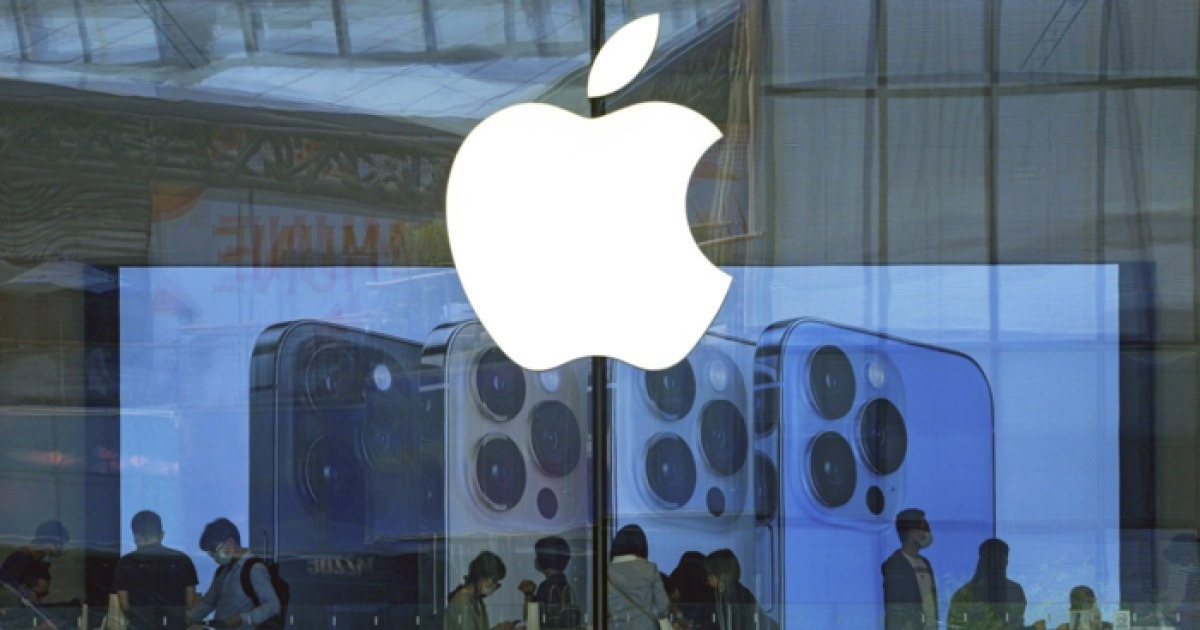
Apple Inc. shares rose 1.31% to $312.66 in New York trading on June 6, as investors increasingly view the company’s cautious approach to massive artificial intelligence capital expenditures as a strategic advantage. While competitors face escalating costs to build AI infrastructure, analysts suggest Apple’s relative distance from this “spending war” has helped the stock avoid the volatility seen in other tech giants.
The market shift reflects a growing skepticism regarding the immediate return on investment (ROI) for generative AI. While Microsoft, Alphabet, and Meta have committed tens of billions of dollars to data centers and Nvidia GPUs, Apple has focused on integrating AI into existing hardware ecosystems through its recently announced Apple Intelligence. This strategy allows the company to leverage its massive installed base of devices without incurring the same level of infrastructure risk as cloud-first providers.
The current valuation reflects a pivot in investor sentiment. For much of 2024, Apple was criticized for being “behind” in the AI race. However, as the broader market begins to question the sustainability of massive AI capital expenditures (CapEx), Apple’s disciplined spending is now being characterized as a stabilizer for its share price.
The Cost of the AI Arms Race vs. Apple’s Integration Strategy
The “spending war” in artificial intelligence is defined by the astronomical costs of training large language models (LLMs) and maintaining the hardware to run them. According to reports from Reuters, the hyperscalers—primarily Microsoft, Google, and Amazon—are spending billions quarterly on AI-specific chips and energy-intensive data centers to maintain a competitive edge in cloud AI services.

Apple’s approach differs by focusing on “on-device” processing. By optimizing AI to run locally on the NPU (Neural Processing Unit) of its A-series and M-series chips, Apple shifts the computational burden from its own servers to the user’s hardware. This reduces the need for the company to build the same scale of server farms required by companies offering purely cloud-based AI assistants.
This distinction is critical for the company’s balance sheet. While other Big Tech firms are seeing their margins pressured by the depreciation of expensive hardware and high electricity costs, Apple continues to maintain high margins on its hardware sales. The integration of Apple Intelligence, announced at WWDC 2024, aims to drive a “supercycle” of iPhone upgrades without requiring a proportional increase in Apple’s own capital spending.
Market Reaction and the “Middle Ground” Advantage
The phrase “staying in the middle” (가만히 있으면 중간은 간다) has become a focal point for analysts describing Apple’s current position. In the context of the New York Stock Exchange, this means that by not overextending into speculative AI infrastructure, Apple has avoided the sharp corrections that hit other tech stocks when AI growth projections failed to meet immediate revenue gains.

According to data from Bloomberg, the market is currently rewarding “prudent” AI implementation over “aggressive” AI expansion. Apple’s strategy of partnering with OpenAI to integrate ChatGPT into Siri—rather than building a competing general-purpose LLM from scratch for every task—allows the company to offer cutting-edge features while outsourcing the most expensive parts of the compute process.
Investors are also weighing the impact of Apple’s ecosystem lock-in. Because Apple Intelligence is designed to work across iOS, iPadOS, and macOS, the company can monetize AI through hardware sales (new iPhones) rather than relying solely on monthly AI subscription fees, which have proven difficult for some competitors to scale.
Risks of a Conservative AI Stance
Despite the short-term stock recovery, the strategy of avoiding massive CapEx carries inherent risks. If the “on-device” AI trend is eclipsed by a breakthrough in cloud-based AI that requires massive centralized power, Apple could find itself lacking the infrastructure to compete. Furthermore, the company’s reliance on third-party models for certain high-end tasks creates a dependency on partners like OpenAI.
There is also the challenge of regulatory scrutiny. As Apple integrates AI more deeply into its operating systems, it faces ongoing antitrust investigations in the U.S. and EU regarding how it manages its App Store and third-party integrations. Any ruling that forces Apple to open its ecosystem further could dilute the “walled garden” effect that makes its AI strategy so profitable.
Comparing AI Investment Models
The divergence in strategy between Apple and its peers can be seen in how they approach the “AI Stack.” While Microsoft and Google are building the foundation (the chips, the clouds, and the models), Apple is focusing on the application layer (the user interface and the device integration).

This creates a different risk profile:
- Hyperscalers: High risk, high reward. They spend billions on infrastructure hoping to own the “platform” of the future.
- Apple: Lower infrastructure risk, high execution risk. They rely on the consumer’s desire to upgrade hardware to justify the AI investment.
The recent 1.31% climb in share price suggests that, for now, the market prefers the lower-risk profile of Apple’s “integration first” model over the “infrastructure first” model of its competitors.
The next major catalyst for Apple’s AI narrative will be the official release and consumer adoption of Apple Intelligence in the upcoming iOS updates. Investors will be watching for evidence that these features are driving significant hardware sales increases in the next quarterly earnings report.
Do you believe Apple’s cautious AI spending is a masterstroke or a missed opportunity? Share your thoughts in the comments below.
Related reading