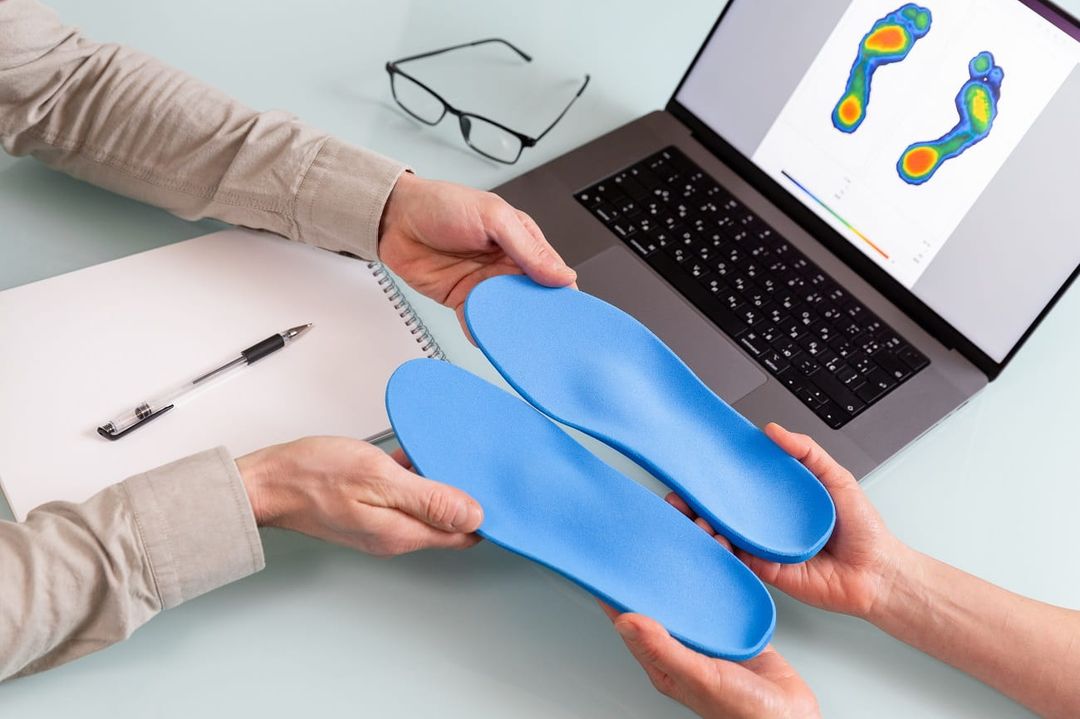
Orthopedic specialists and physical therapists are increasingly debating the efficacy of shoe insoles, with some practitioners arguing that over-reliance on corrective inserts can weaken the foot’s natural musculature. This debate centers on whether passive support from orthotics prevents the body from developing the strength necessary to maintain stability and balance during movement.
The conversation has gained traction on social media, specifically through short-form video content where practitioners use provocative claims to challenge traditional podiatric norms. One such perspective suggests that using insoles for the purpose of “fixing” foot posture is counterproductive, asserting that the foot should instead be trained through active exercise and barefoot movement to regain its functional capacity.
Medical consensus generally divides the use of insoles into two categories: corrective and accommodative. While some devices are designed to shift the alignment of the foot, others are intended to redistribute pressure to reduce pain. The tension between these two approaches often defines the conflict between traditional orthopedic prescriptions and the “functional” movement school of thought.
Why are some therapists calling shoe insoles ineffective?
Critics of long-term insole use, including various physical therapy practitioners, argue that orthotics act as a “cast” for the foot. According to the principles of neuromuscular adaptation, when a muscle or joint is supported by an external device, the body may stop recruiting the muscles required to stabilize that area. This process can lead to muscle atrophy and a decrease in proprioception, which is the body’s ability to sense its position in space.

The argument is that by removing the need for the foot to adapt to the ground, the intrinsic muscles of the arch become dormant. This creates a cycle of dependency where the patient feels they cannot walk comfortably without the insert because the foot has lost its natural strength. Proponents of this view suggest that “active” rehabilitation—incorporating foot gymnastics, balance training, and walking barefoot on varied surfaces—is a more sustainable solution for long-term foot health than passive support.
However, this perspective is often presented as a “pointed” or exaggerated take to spark discussion. The goal is typically to move patients away from a passive mindset and toward an active recovery process. In these frameworks, insoles are not necessarily “nonsense” for everyone, but are viewed as a temporary tool rather than a permanent cure.
When are orthotics actually medically necessary?
Despite the trend toward barefoot movement, clinical data supports the use of orthotics for specific medical conditions. According to the American Physical Therapy Association, orthotic devices can be critical for patients with severe structural deformities, acute injuries, or systemic diseases that affect foot morphology.
For individuals with severe pes planus (flat feet) that cause significant pain or those suffering from diabetic neuropathy, insoles provide essential pressure redistribution. In these cases, the goal is not necessarily to “strengthen” a non-existent arch, but to protect the skin from ulceration or to reduce the load on a joint that cannot physiologically handle the stress. For these populations, abandoning insoles without medical supervision can lead to secondary injuries.
The distinction lies in the intent: using an insole to mask pain while ignoring the underlying muscle weakness is viewed by functional therapists as a mistake. Using an insole to manage a permanent structural limitation is viewed as a medical necessity.
How to transition from passive support to active foot strength
For those looking to reduce their dependency on shoe inserts, experts suggest a gradual transition rather than an immediate stop. A sudden shift to barefoot walking for someone who has used rigid orthotics for years can result in tendonitis or stress fractures due to the sudden increase in load.
Commonly recommended steps for improving foot function include:
- Gradual Exposure: Spending 15 to 30 minutes a day walking barefoot on natural surfaces like grass or sand to stimulate sensory receptors.
- Intrinsic Muscle Training: Performing “toe curls” or “short foot” exercises, where the individual attempts to lift the arch without curling the toes.
- Footwear Selection: Moving toward “minimalist” shoes with a wide toe box and low heel-to-toe drop, which allow the toes to splay naturally.
- Balance Work: Using wobble boards or single-leg stands to force the ankle and foot to make micro-adjustments for stability.
This approach shifts the focus from “correcting” the shape of the foot to “optimizing” the function of the foot. The objective is to build a foot that is resilient enough to handle the stresses of daily activity without needing external stabilization.
Comparing Passive Support vs. Active Rehabilitation
The difference between these two philosophies can be seen in how they treat a symptom like heel pain or arch collapse.
| Approach | Primary Tool | Goal | Long-term Effect |
|---|---|---|---|
| Passive Support | Rigid/Soft Insoles | Symptom relief & alignment | Stability via external device |
| Active Rehab | Exercise & Barefooting | Muscle recruitment & strength | Stability via internal strength |
While passive support provides immediate relief, the active approach seeks a permanent physiological change. The risk of the passive approach is the aforementioned atrophy; the risk of the active approach is the potential for acute injury if the transition is too rapid.
Current trends in sports medicine are leaning toward a hybrid model: using orthotics to manage pain in the short term while simultaneously implementing a strength program to eventually phase out the need for those devices.
Patients are encouraged to consult with a licensed physical therapist or podiatrist to determine if their specific foot structure allows for a transition to barefoot movement or if a permanent orthotic is required for joint protection.
Further updates on orthopedic guidelines and footwear standards are typically released during annual medical conferences and through updated clinical practice guidelines from national health organizations. Share your thoughts on foot health and your experience with orthotics in the comments below.