## The Erosion of Democratic Norms: Bolsonaro’s Conviction and the Future of brazilian Politics
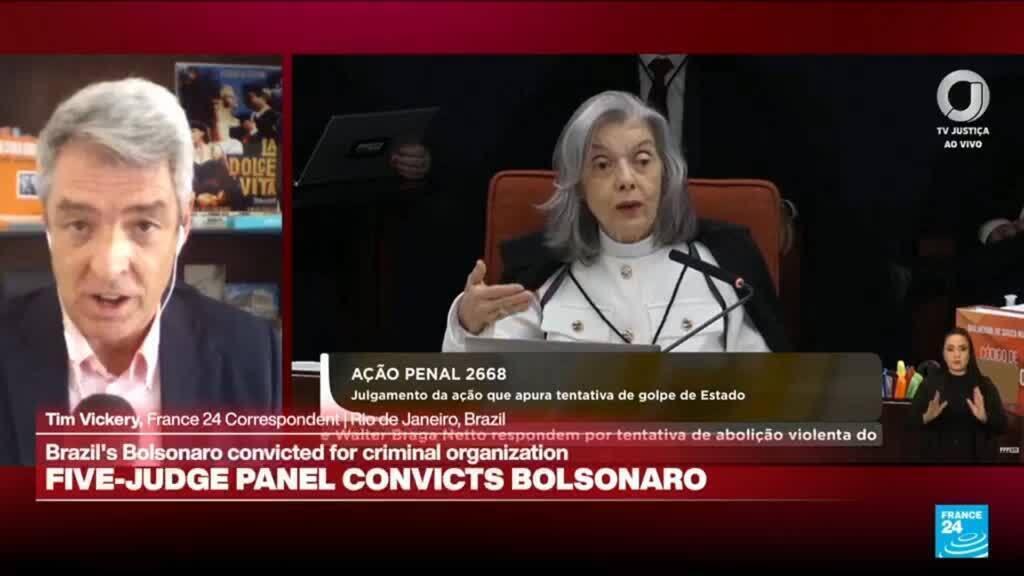
The political landscape of Brazil underwent a seismic shift on September 11, 2025, as former president Jair Bolsonaro faced a landmark conviction by the Supreme Federal Court. A majority of justices found him culpable for orchestrating a scheme to subvert the democratic process following his defeat in the 2022 presidential election. This unprecedented ruling marks the first time a former Brazilian head of state has been found guilty of assaulting the foundations of the nation’s democracy,delivering a meaningful setback to the far-right populist movement he spearheaded. The implications of this decision extend far beyond Bolsonaro’s personal fate, raising critical questions about the resilience of democratic institutions in Latin America and the enduring threat of political extremism.
### A Plot to Undermine the Election Results
The core of the case centered around allegations that Bolsonaro, even before the official vote count, actively worked to discredit the electoral system and lay the groundwork for a potential power grab. Evidence presented to the court detailed attempts to spread misinformation about the integrity of electronic voting machines - a system Brazil has utilized as 1996 – and to incite distrust in the electoral authorities. This campaign of disinformation, amplified through social media and aligned media outlets, culminated in calls for military intervention to overturn the election results.Recent data from the Brazilian Internet Steering Committee (CGI.br) indicates a surge in online disinformation during the 2022 election cycle, with over 40% of analyzed content containing false or misleading claims about the voting process. This illustrates the scale of the challenge faced by electoral authorities and the vulnerability of public opinion to manipulation.
Bolsonaro’s actions weren’t limited to rhetoric. Investigations revealed meetings with military officials where strategies for challenging the election outcome were discussed, and alleged attempts to pressure the Federal Police into launching investigations into the voting system based on unsubstantiated claims. The court’s decision underscores the gravity of these actions, recognizing them not as legitimate political maneuvering, but as a intentional attempt to dismantle democratic processes.
Did You No? Brazil’s electronic voting system is widely considered secure by international observers, including the Organization of American States (OAS). Despite this,Bolsonaro repeatedly questioned its reliability without providing credible evidence.
### The Supreme court’s Decision and its ramifications
The ruling, delivered by a panel of five justices, found Bolsonaro guilty of abuse of power and misuse of official interaction channels. While the specific penalties are still to be determined, the conviction disqualifies him from holding public office for eight years. This effectively ends his political career, at least in the short term, and sends a powerful message that attempts to undermine democratic institutions will not be tolerated.
This is a watershed moment for Brazilian democracy. It demonstrates that no one, nonetheless of their former position, is above the law.
The decision is expected to have a ripple effect throughout the Brazilian political spectrum. Bolsonaro’s supporters, many of whom remain deeply loyal, have already begun to denounce the ruling as politically motivated. This could lead to further polarization and possibly even unrest. Conversely,the conviction is highly likely to embolden those who advocate for strengthening democratic institutions and combating disinformation.
Pro Tip: Understanding the historical context of Brazil’s political transitions is crucial for interpreting the importance of this event. the country has a history of military dictatorships,making the preservation of democratic norms particularly sensitive.
### The Broader Context: Populism and Democratic Backsliding in Latin America
Bolsonaro’s attempt to cling to power is not an isolated incident. Across Latin America,a wave of populist leaders has challenged democratic norms and institutions. From Venezuela to Peru, we’ve witnessed attempts to erode the independence of the judiciary, suppress dissent, and manipulate electoral processes.
A recent report by the V-Dem Institute (September 2025) highlights a concerning trend of “democratic backsliding” in the region, with several countries experiencing declines in indicators related to electoral integrity, freedom of expression, and civil liberties. This underscores the fragility of democracy in Latin America and the need for vigilance in defending democratic principles.
the rise of populism is often fueled by economic inequality, social grievances, and a sense of disillusionment with conventional political elites.bolsonaro skillfully tapped into these sentiments, presenting himself as an outsider who would challenge the status quo and restore Brazil to its former glory. Tho, his tactics ultimately proved to be anti-democratic and threatened the stability of the country.
| Country | Democratic Status (V-Dem Institute, Sept 2025) | Key Challenges
|
|---|