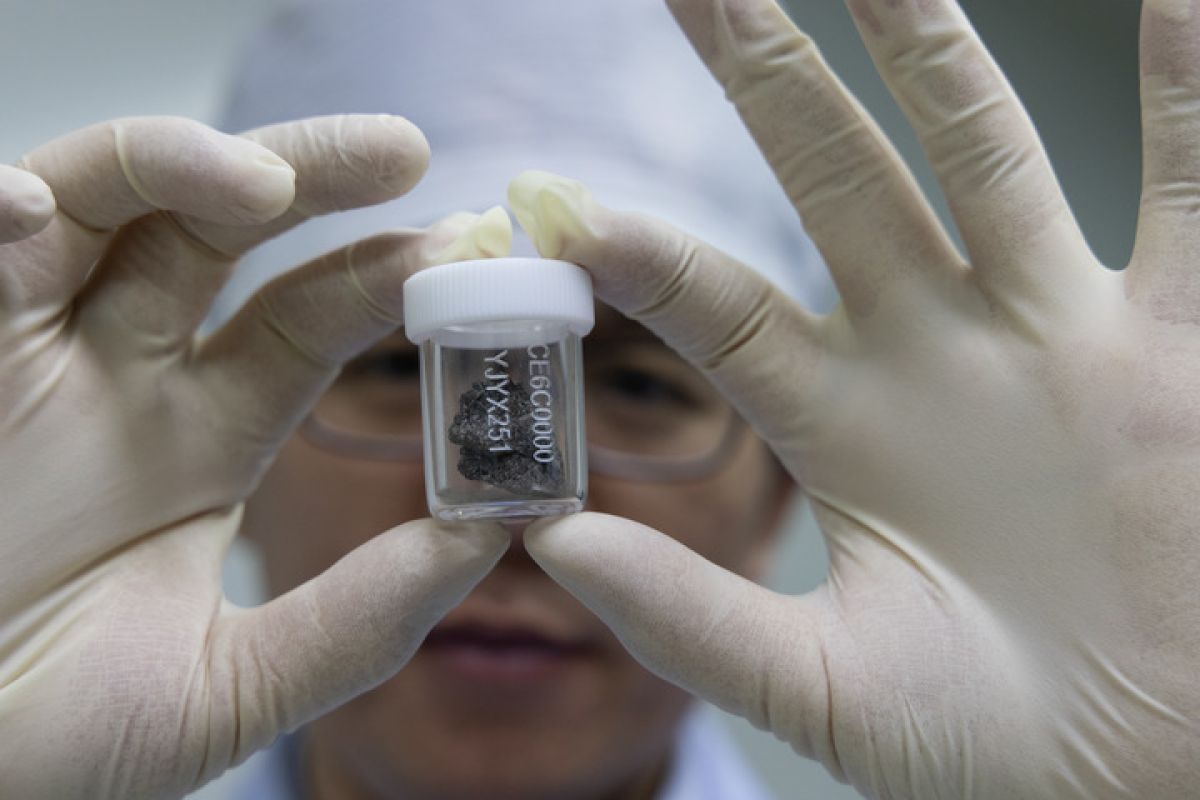
The lunar far side has long been a mystery, a silent witness to the violent infancy of our solar system. Now, analysis of the Chang’e 6 lunar samples asteroid bombardment history is providing a rare glimpse into the chaotic events that shaped not only the Moon but the very habitability of Earth. Researchers have uncovered a fundamental shift in the types of asteroids striking the Earth-moon system, suggesting a cosmic transition that occurred billions of years ago.
In a study recently published in the Journal of Geophysical Research: Planets, a team from the Institute of Geology and Geophysics, Chinese Academy of Sciences (IGGCAS), revealed that the composition of asteroid impactors changed significantly between 4.3 billion and 2.8 billion years ago. The findings indicate a transition from a period dominated by non-carbonaceous asteroids to one characterized by the arrival of carbonaceous asteroids—objects known to carry water and organic compounds.
This discovery is more than a geological curiosity; it addresses one of the most enduring questions in planetary science: where did Earth’s water and the organic precursors to life come from? By treating the lunar surface as a prehistoric archive, scientists are now able to map the delivery system of these essential materials with unprecedented precision.
For the global scientific community, these results validate the strategic importance of the Chang’e 6 mission, which successfully collected samples from the lunar far side—a region that has remained largely inaccessible and untouched by previous sample-return missions. Because the Moon lacks the tectonic activity and atmospheric erosion that erase geological records on Earth, it serves as a high-fidelity “time capsule” for the entire Earth-moon system.
The Lunar Archive: Decoding 40 Impact Clasts
To reconstruct the history of asteroid impacts, the research team, led by researcher Lin Yangting, focused on “impact clasts”—minor fragments of rock that are blasted into the lunar soil during massive collisions. These clasts often contain tiny metallic particles, primarily iron-nickel, which act as chemical fingerprints of the asteroid that caused the impact.
The team isolated 40 of these impact clasts from the lunar far-side soil. By analyzing the mineral composition associated with the metallic particles, the researchers were able to categorize the impact events into two distinct chronological groups based on the geological context of the debris.
The first group consisted of fragments found within basaltic debris. Basalt is a volcanic rock that formed on the Moon during eruptions that occurred relatively recently in geological terms—specifically, around 2.8 billion years ago. The impact clasts embedded in this basalt record the “younger” history of asteroid collisions.
The second group originated from lunar highland anorthosites. Anorthosite is one of the oldest rock types on the Moon, forming the primary crust of the highlands. These fragments were “splashed” from other regions during ancient collisions, recording impact events that date back as far as 4.3 billion years. By comparing these two groups, the team could see a clear evolution in the chemistry of the asteroids hitting the Moon.
The Great Shift: From Non-Carbonaceous to Carbonaceous
The most striking finding of the study is the stark contrast in the type of asteroids bombarding the system across these two eras. In the oldest samples—those dating back 4.3 billion years—metallic particles linked to carbonaceous asteroids were extremely rare. During this early period, the Earth-moon system was primarily struck by non-carbonaceous asteroids.
However, as the timeline progressed toward 2.8 billion years ago, the proportion of carbonaceous impactors increased significantly. This indicates a systemic shift in the “delivery” of asteroids to the inner solar system. Carbonaceous asteroids are fundamentally different from their non-carbonaceous counterparts; they are rich in volatile elements, water-bearing minerals, and carbon-based organic molecules.
This transition suggests that the “water-rich” era of bombardment began later than some previous models had suggested. The arrival of these carbonaceous bodies likely played a critical role in the delivery of water and organic materials to Earth, potentially contributing to the formation of the oceans and the emergence of a habitable environment.
Understanding the Asteroid Distinction
To understand why this shift matters, it is necessary to distinguish between the two types of asteroids identified by the Chinese Academy of Sciences:
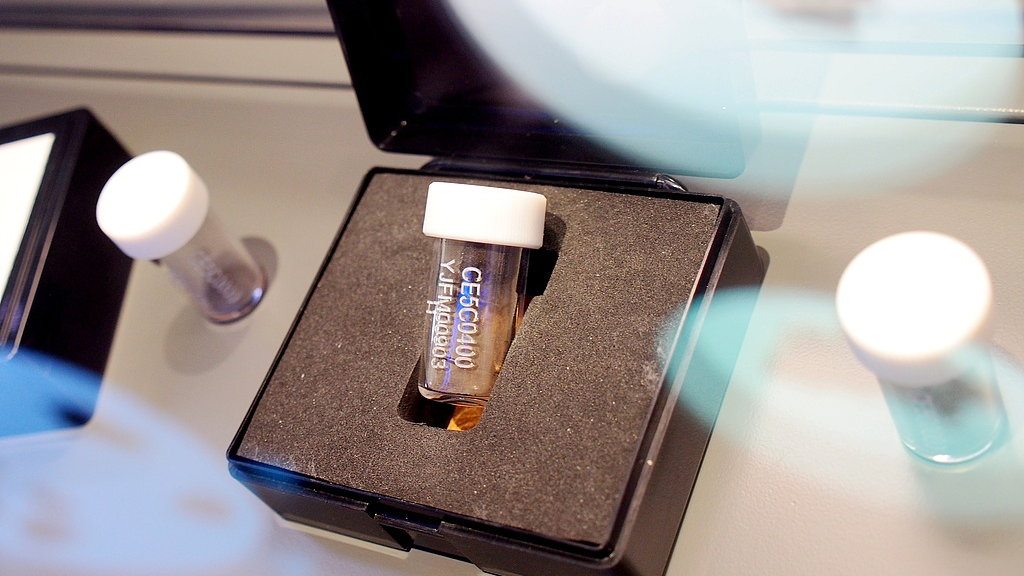
- Non-Carbonaceous Asteroids: These are typically drier and composed of silicate rocks and metals. They are common in the inner asteroid belt and do not carry the volatile organic compounds necessary for life.
- Carbonaceous Asteroids: These are “primitive” asteroids, often originating from the outer regions of the asteroid belt or beyond. They contain high concentrations of carbon and water (in the form of hydrated minerals), making them the primary suspects for the “seeding” of Earth.
The Role of Giant Planet Migration
The question then becomes: why did the type of asteroid bombarding the Earth-moon system change so drastically? The research team attributes this shift to the dynamics of the early solar system, specifically the migration of giant planets.
Current astrophysical theories suggest that in the first few hundred million years of the solar system, the giant planets—Jupiter, Saturn, Uranus, and Neptune—did not start in their current orbits. Instead, they migrated inward and outward, creating massive gravitational instabilities. This “planetary dance” would have acted as a gravitational slingshot, scattering asteroids from different regions of the solar system.
The study suggests that the migration of these giant planets eventually scattered carbonaceous asteroids from the outer regions of the asteroid belt inward toward the Earth-moon system. This gravitational shift effectively “opened the gates” for water-rich asteroids to enter the inner solar system, leading to the increased frequency of carbonaceous impacts observed in the samples dating to 2.8 billion years ago.
Why the Moon is the Key to Earth’s History
A recurring theme in the Chang’e 6 findings is the disparity between the geological records of Earth and the Moon. On Earth, the process of plate tectonics—where the crust is constantly recycled into the mantle—destroys the majority of ancient impact records. Most meteorites found on Earth today reflect impact events from only the last 2 million years; records from billions of years ago are virtually non-existent.
The Moon, however, is geologically “quiet.” Without plate tectonics or a thick atmosphere to erode the surface, the lunar regolith (soil) acts as a permanent archive. Every major collision for the last 4 billion years has left a mark. By analyzing the lunar far-side soil, scientists are essentially reading a history book of the early solar system that has been erased on Earth.
The far side of the Moon is particularly valuable because it has been less influenced by the gravitational and tidal forces of Earth compared to the near side. This makes it a more pristine environment for capturing the record of cosmic collisions over eons.
Implications for the Search for Life
The timing of the carbonaceous asteroid influx has profound implications for astrobiology. If the delivery of water and organics peaked later than previously thought, it may shift our understanding of when Earth became truly habitable. The arrival of these materials may have provided the “chemical spark” necessary for the transition from a sterile, volcanic world to one capable of supporting complex biochemistry.
this discovery provides a roadmap for future missions to other celestial bodies. By understanding how giant planet migration affects the distribution of volatiles, scientists can better predict where to look for water and organic markers on Mars, the moons of Jupiter (such as Europa), and the moons of Saturn (such as Enceladus).
Looking Ahead: The Next Phase of Analysis
The samples returned by Chang’e 6 are currently undergoing rigorous analysis by teams in China and through international collaborations. While the identification of the asteroid shift is a landmark finding, researchers are now looking deeper into the isotopic composition of the 40 impact clasts to determine the exact origin of the carbonaceous asteroids.
Future studies are expected to focus on the precise timing of the “water delivery” phase and whether these impacts coincided with specific biological milestones in Earth’s early history. The scientific community is also awaiting further data on the oxygen isotope ratios within the samples, which could provide more definitive proof of the asteroids’ origins in the outer solar system.
As the analysis continues, the results will likely be integrated into broader models of solar system evolution, helping astronomers refine the timeline of planetary migration and the distribution of life-essential elements across the galaxy.
The next confirmed checkpoint for this research will be the continued publication of peer-reviewed findings as the international community gains access to more detailed data from the Chang’e 6 sample set. We will continue to monitor these developments as they reshape our understanding of our cosmic origins.
Do you think the Moon holds more secrets about Earth’s origin than we’ve yet discovered? Share your thoughts in the comments below or share this article with your network.
Keep reading