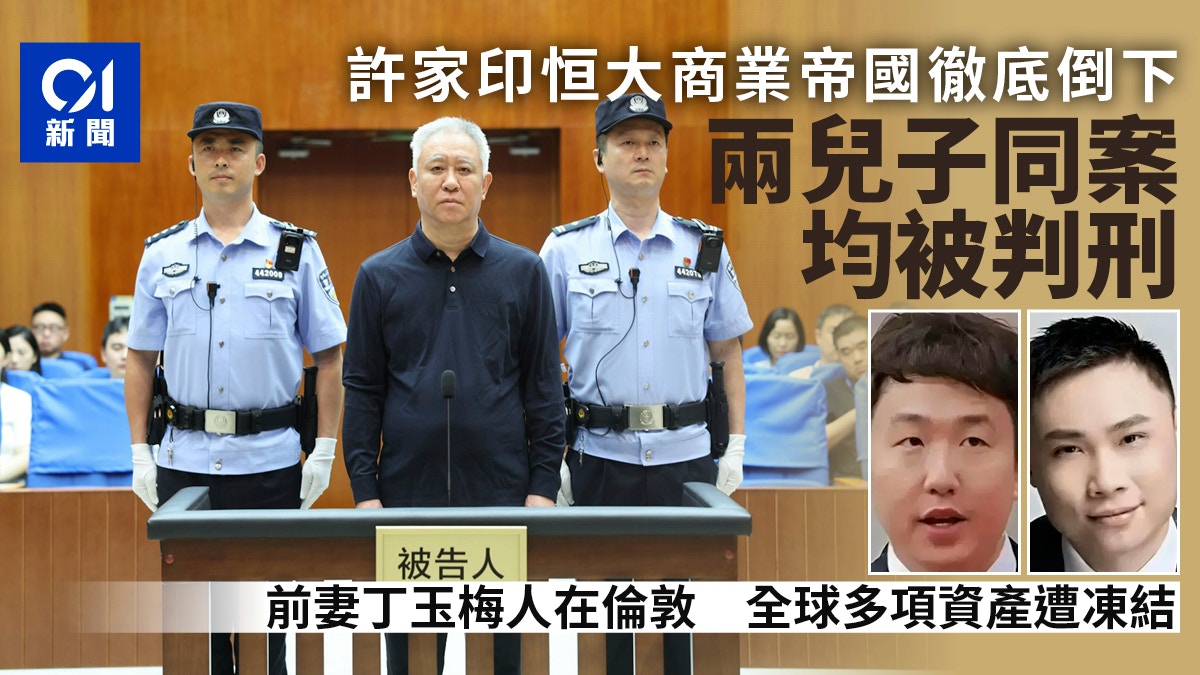
The Intermediate People’s Court in Shenzhen handed down a life sentence to China Evergrande Group founder Xu Jiaxin following a high-profile public trial stemming from the massive debt and fraud crisis that engulfed the world’s most indebted real estate developer. According to court records and public announcements from mainland authorities, the judicial proceedings concluded with severe financial penalties for the corporate entities involved, alongside prison terms for multiple family members and executives connected to the fallen property empire.
Xu Jiaxin, once hailed as one of China’s wealthiest entrepreneurs, was sentenced to life imprisonment, stripped of his political rights for life, and subjected to the complete confiscation of his personal assets. Legal filings and investigative reports highlight that the judgment marks a definitive judicial milestone in unraveling the systemic financial leverage and debt-fueled expansion that defined an era of rapid growth in China’s property market.
The sweeping verdict extends beyond the founder, encompassing his two sons, Xu Zhijian and Xu Tenghe, who faced sentencing alongside other former executives in the same judicial series, receiving prison terms ranging from one year and ten months to eighteen years.
Corporate Fallout and Family Sentences
The judicial rulings detail diverging paths and responsibilities within the corporate hierarchy for Xu Jiaxin's immediate family. Conversely, the younger son, Xu Tenghe, was positioned along a succession track, occupying core executive positions within the group and directing operations tied to the troubled wealth management arm, Hengda Wealth.
Despite their differing levels of public visibility, both brothers were drawn into the sweeping criminal liabilities adjudicated by the Shenzhen court. While exact individual charges and precise sentence lengths for the brothers remained compartmentalized within the broader sentencing framework for the co-defendants, legal observers emphasize that the inclusion of family members underscores the comprehensive scope of the state’s prosecution into corporate malfeasance. The unfolding legal actions highlight how aggressive borrowing practices and opaque off-balance-sheet financing ultimately eroded the financial foundations of a corporation that once commanded hundreds of subsidiaries and vast land reserves across multiple provinces.
Global Asset Freezes and Ongoing Recovery Efforts
While judicial authorities prosecute executives inside mainland China, international jurisdictions are actively managing the collateral fallout regarding overseas holdings tied to the family. Ding Yumei, the former wife of Xu Jiaxin, currently resides in London while facing extensive asset freezes imposed by international courts. Legal filings indicate that her global holdings—including high-end London residential properties, riverside apartments, and multi-jurisdictional bank deposits—have been targeted for recovery by liquidators and creditors seeking to recoup billions in unpaid obligations.
British judicial proceedings have established strict financial constraints on these frozen assets, ruling that Ding Yumei may draw a limited monthly allowance of 20,000 pounds exclusively for basic living expenses. Subsequent legal petitions aimed at increasing this monthly allowance were formally rejected by the court, signaling a rigid enforcement posture among international tribunals tasked with preserving remaining estate value for global bondholders and institutional creditors.
A Defining Chapter for China’s Real Estate Sector
The sentencing of Xu Jiaxin and the restructuring battles surrounding China Evergrande represent a watershed moment for the nation’s economic landscape. Industry commentators frequently point to the rise and fall of the Henan-born billionaire as a stark illustration of the perils inherent in unchecked corporate leverage. From pioneering high-turnover, high-debt development models that propelled him to the pinnacle of wealth, to the sudden cessation of credit in 2021 that revealed hundreds of billions in liabilities, the trajectory of the conglomerate mirrors the broader evolution and contraction of the Chinese housing market.
As court-appointed administrators continue to untangle complex cross-border debt claims, regulatory bodies maintain heightened scrutiny over financial reporting and risk management across remaining major developers. Stakeholders, including numerous individual homebuyers awaiting unfinished apartments and institutional investors holding defaulted offshore bonds, continue to monitor court filings and liquidation updates issued through official regulatory channels.
Worth a look