Finland’s Icebreaker Diplomacy: A Frozen Asset for Trade and Influence
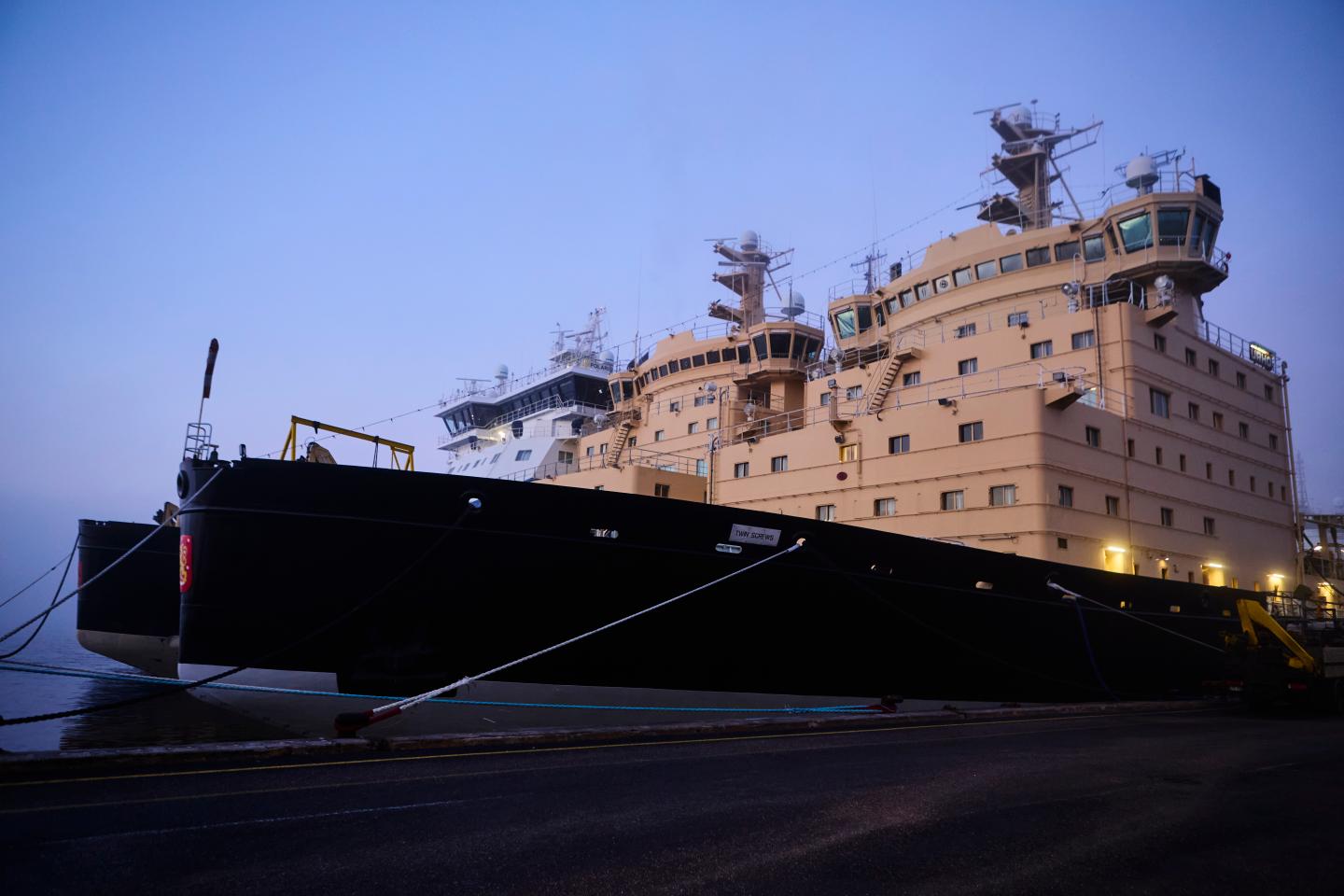
As winter grips the Baltic Sea, a familiar sight emerges from Finnish ports: the nation’s fleet of icebreakers. These powerful vessels aren’t simply tools for ensuring safe passage; they are central to Finland’s economic stability and a key component of its diplomatic strategy. This year, the Voima (“strength”), the oldest active icebreaker in the Finnish fleet having entered service in 1954, led the charge, departing Helsinki on December 31, 2025, followed by the remaining seven vessels over the subsequent weeks. For five months, these icebreakers will assist approximately 2,500 ships navigate the frozen waters, a critical service for maintaining trade routes and regional access. The presence of these vessels is so ingrained in Finnish culture that, as Paavo Kojonen, Vice President of Arctia, the state-owned company managing the fleet, notes, “Every Finn knows the name of one or another.”
But the significance of Finland’s icebreaking capability extends far beyond domestic shipping. It’s a unique expertise that has positioned the country as a leader in cold-water maritime technology and a valuable partner for nations reliant on Arctic and Baltic Sea access. The icebreakers aren’t just breaking ice; they’re forging connections and bolstering Finland’s geopolitical standing. This strategic advantage, honed over decades, has become a cornerstone of Finnish “icebreaker diplomacy,” a subtle yet effective form of soft power projection. The economic impact is substantial, ensuring year-round access to key ports and minimizing disruptions to vital supply chains.
The Voima itself represents a pivotal moment in icebreaker design. Launched in 1952 and commissioned in 1954, it was the first icebreaker globally equipped with two bow propellers, a design innovation that dramatically improved maneuverability and efficiency in challenging ice conditions. According to Wikipedia, this breakthrough propelled the Finnish shipbuilding industry to the forefront of icebreaker technology, a position it maintains to this day. The design allowed for greater control and power when navigating difficult ice formations, setting a new standard for icebreaking vessels worldwide.
A Fleet Forged in Innovation and Necessity
Beyond the Voima, other vessels like the Sisu (“inner strength”) and the Urho – named after former President Urho Kekkonen, who died in 1986 – are well-known members of the fleet. Both were constructed in the 1970s at the Helsinki shipyard, alongside Otso and Kontio – Finnish words for bears – which have been operational since the 1980s. The Fennica and Nordica followed, built at the Rauma shipyard in 1993 and 1994, respectively. Each vessel represents a step forward in icebreaking technology, incorporating lessons learned and adapting to evolving maritime demands.

The Polaris: A Showcase of Finnish Engineering
Visitors to Finland are often taken aboard the Polaris, launched in 2016, as a demonstration of the country’s icebreaking prowess. According to Arctia, the Polaris is the world’s first icebreaker to operate on liquefied natural gas (LNG), a significant step towards reducing emissions and promoting sustainable maritime practices. Kojonen emphasizes its superiority for Baltic Sea operations, citing its power, modern hull design, and propulsion system. The vessel’s capabilities have attracted considerable international attention, with Arctia hosting at least two American delegations per week until late September 2025, according to company spokesperson Jukka Viitanen.
The Polaris’s LNG-fueled engine represents a commitment to environmental responsibility, a growing concern in the maritime industry. The shift towards cleaner fuels is driven by increasingly stringent international regulations aimed at reducing greenhouse gas emissions from shipping. Finland’s leadership in this area not only enhances its reputation but similarly positions its shipbuilding industry for future success in a rapidly evolving market. The vessel’s design also incorporates advanced ice-monitoring and navigation systems, further enhancing its efficiency and safety.
Technical Specifications and Operational Capacity
The Voima, despite its age, remains a vital asset. As of 2024, its key specifications, as detailed in Wikipedia, include a gross tonnage of 3,850 GT, a displacement of 4,415 tons, and a length of 83.5 meters. Following a significant refit in 1978-1979 and further upgrades in 2016, the vessel now boasts an ice class of 1A Super and is powered by six Wärtsilä 16V22 engines, delivering a combined propulsion power of 10,240 kW. This allows it to achieve a speed of 16 knots in open water and 2 knots although breaking ice 1.2 meters thick. The Polaris, with its 1A Super ice class and 10.2 MW of propulsion power, represents the cutting edge of Finnish icebreaking technology.
Beyond Breaking Ice: The Economic and Geopolitical Impact
The economic benefits of Finland’s icebreaking fleet are considerable. By ensuring navigable waterways throughout the winter months, the icebreakers facilitate trade, reduce shipping costs, and support industries reliant on maritime transport. The fleet’s operations are particularly crucial for ports in the Gulf of Bothnia and the Gulf of Finland, which would be largely inaccessible without icebreaking assistance. This service isn’t limited to Finnish-flagged vessels; the fleet also assists ships from other nations, further solidifying Finland’s role as a regional maritime hub. The ability to maintain these crucial shipping lanes is a significant economic advantage for Finland and its trading partners.
the expertise developed in icebreaker design and operation has created a valuable export market for Finnish companies. Arctia, for example, provides icebreaking services and consultancy to other countries, sharing its knowledge and technology. The construction of icebreakers for other nations, such as the vessels built for the Soviet Union in the 1950s and Sweden’s Oden, demonstrates Finland’s capacity to deliver specialized maritime solutions on a global scale. This export of expertise contributes to Finland’s economic growth and strengthens its international relationships.
The strategic implications are equally significant. In a region where maritime access is often subject to geopolitical tensions, Finland’s icebreaking capabilities provide a degree of security and influence. The fleet’s presence demonstrates Finland’s commitment to maintaining stability in the Baltic Sea and ensuring freedom of navigation. This capability is particularly relevant in the context of increasing Arctic activity and the growing importance of the Northern Sea Route. Finland’s expertise in icebreaking positions it as a key player in shaping the future of maritime activity in the region.
Looking ahead, the demand for icebreaking services is likely to remain strong, driven by climate change and the increasing accessibility of Arctic waters. Arctia continues to invest in new technologies and sustainable practices to ensure its fleet remains at the forefront of icebreaking innovation. The ongoing modernization of the fleet, coupled with Finland’s commitment to environmental responsibility, will solidify its position as a global leader in this critical maritime sector. The next major development to watch will be the implementation of new regulations regarding emissions in the Baltic Sea, expected to be finalized by the International Maritime Organization (IMO) in late 2026.
The story of Finland’s icebreakers is more than just a tale of engineering and maritime prowess; it’s a testament to the country’s strategic foresight and its ability to leverage a unique capability for economic and diplomatic advantage. As the Baltic Sea freezes each winter, the Finnish icebreakers will continue to play a vital role in ensuring safe passage, fostering trade, and projecting Finland’s influence on the world stage. We encourage readers to share their thoughts on the importance of icebreaking technology and its impact on global trade in the comments below.