the Evolutionary Puzzle of digits: How Fish and Mammals Diverged in Limb Growth
Have you ever wondered how fins evolved into hands and feet? The story isn’t a simple,linear progression,as new research reveals a captivating divergence in how fish and mammals utilize the same genetic toolkit – specifically,Hox genes – too build their limbs. For decades,scientists believed that digits (fingers and toes) arose from an elaboration of the genetic systems already present in fish fins. However, a recent study challenges this assumption, uncovering a surprising twist in the evolutionary tale of vertebrate limb development. This article delves into the intricacies of this discovery,exploring the role of regulatory DNA and the unexpected function of Hox genes in fish.
Unraveling the Genetic Code of Limb Formation
The foundation of limb development lies within hox genes,a family of genes crucial for establishing body plans across the animal kingdom. These genes dictate where structures form along the head-to-tail axis. In the context of limbs, they play a vital role in specifying the identity of digits.Early observations suggested a parallel between the elimination of Hox genes in fish and the disruption of fin ray formation,hinting at a shared ancestral mechanism. However, this seemingly straightforward connection began to unravel when researchers focused on the regulatory elements controlling Hox gene activity in limbs.
Hox gene clusters aren’t simply strings of coding DNA; they’re flanked by regulatory DNA regions – located both upstream (5′) and downstream (3′) – that control when and where these genes are switched on. Crucially, in mammals, deleting the upstream regulatory region of a Hox cluster effectively silences the genes responsible for digit formation. But what happens in fish?
Different Mechanisms, Shared Genes: The Fish-Mammal Divide
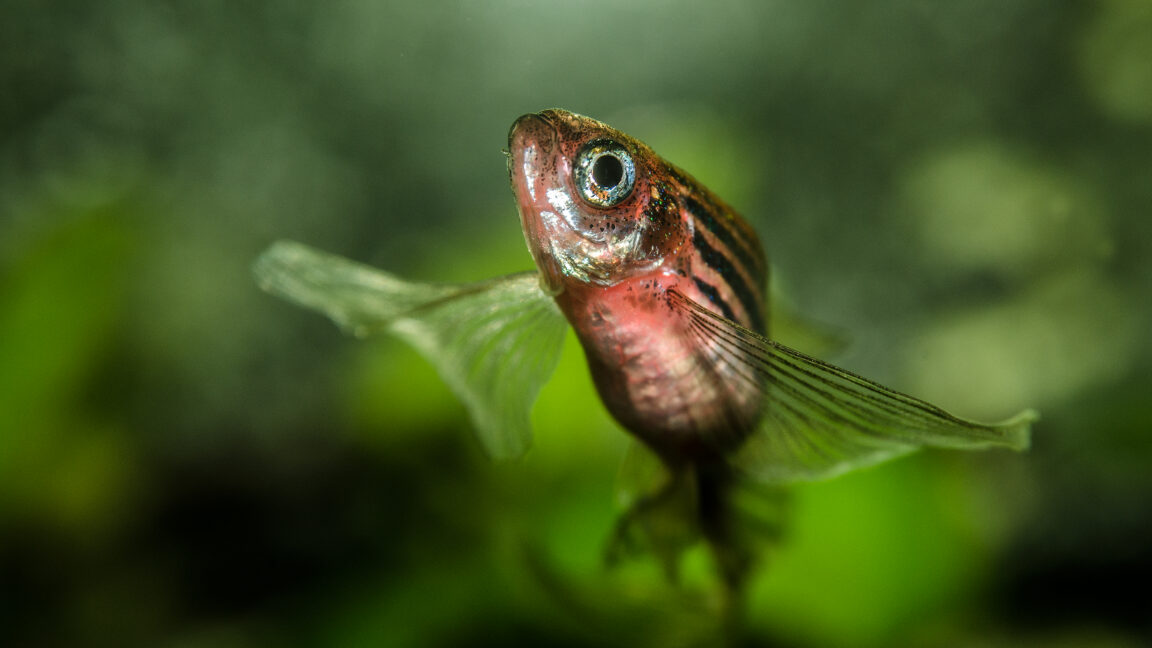
A collaborative US-French research team investigated this question using the zebrafish, a common model organism in developmental biology. Employing the precise gene editing tool CRISPR, they deleted the equivalent upstream regulatory region in zebrafish. Surprisingly, the results were markedly different from those observed in mice. While Hox gene activity was slightly reduced,it didn’t disappear.The genes remained active in the developing limb, capable of forming digits. this suggests that while the activity of Hox genes appears similar in both fish and mammals, the reasons for that activity are fundamentally different.
This finding is a significant departure from the previous hypothesis. It indicates that Hox gene activity in digits isn’t an ancestral trait inherited from a common ancestor. Instead, it appears to have evolved independently in ray-finned fish and the vertebrate lineage leading to mammals – a case of convergent evolution. This means that both groups arrived at a similar outcome (digit formation) through different genetic pathways.
But if the deleted regulatory DNA wasn’t essential for activating Hox genes in the limb, where was it needed? The researchers expanded their investigation, meticulously mapping Hox gene activity in fish with and without the deletion. They discovered a crucial role in a entirely unexpected location: the developing cloaca.
The cloaca is a single opening in fish responsible for excretion and reproduction – essentially, their equivalent of a rear end. This discovery highlights a fascinating repurposing of genetic regulatory elements. The same DNA sequence that influences digit formation in mammals plays a critical role in the development of a completely different anatomical structure in fish.This underscores the plasticity of genetic systems and the complex interplay between genes and evolution. Learn more about Hox genes and their role in development from the National Human Genome Research Institute.
Practical Implications & Future Research: Understanding these divergent pathways has implications for regenerative medicine. If we can decipher how fish regenerate fins – a process far more efficient than mammalian limb regeneration – we might unlock new strategies for healing injuries and treating limb loss in humans. Further research will focus on identifying the specific downstream targets of Hox genes in both fish and mammals, and how these targets differ to produce distinct developmental outcomes.
recent Statistics: A 2023 study published in Developmental Biology found that manipulating Hox gene expression in zebrafish can lead to partial fin-to-limb transformation, further supporting the idea of shared genetic potential despite divergent developmental pathways.
Evergreen Insights: The Power of Regulatory DNA
The story of Hox genes and limb development beautifully illustrates the power of regulatory DNA. While the coding sequences of genes often remain relatively conserved throughout evolution, changes in the regulatory regions can drive dramatic shifts in development and morphology. These regulatory elements act as “switches,” controlling when, where, and how strongly genes are expressed. Understanding these switches is key to unlocking the secrets of evolution and development. This principle extends beyond limb formation, influencing everything from brain development
Related reading