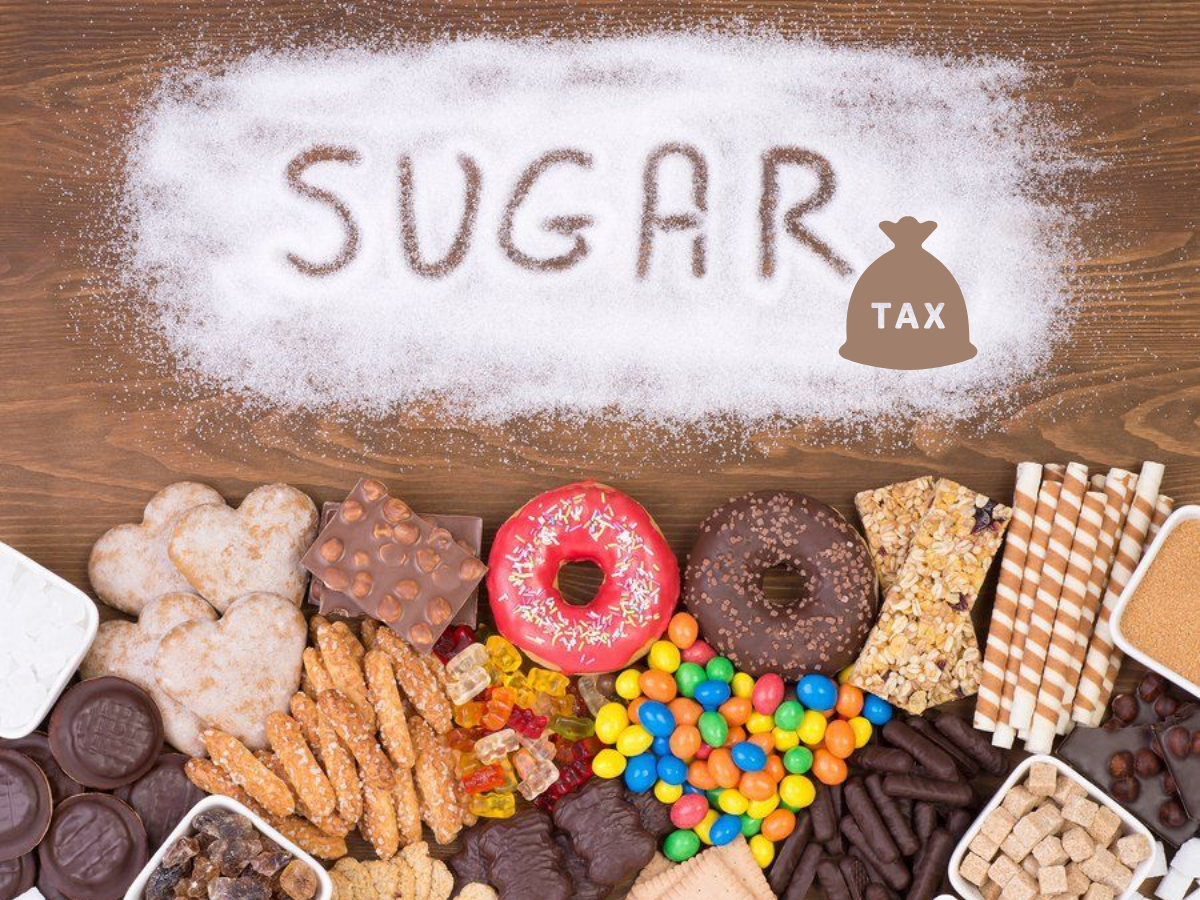
The South Korean beverage industry is on high alert as discussions regarding the implementation of a “sugar tax” have resurfaced, sparking a heated debate over public health versus economic stability. With the rise of “sugarflation”—a blend of sugar and inflation—concerns are mounting that fresh levies on sweetened drinks could drive up consumer prices during an already volatile economic period.
At the center of the current discourse is a specific policy proposal designed to curb the nation’s rising sugar consumption. Unlike a flat tax, the proposed model suggests a tiered approach that penalizes higher sugar concentrations, effectively incentivizing manufacturers to reformulate their recipes to avoid financial burdens. While the government has maintained a cautious distance, the detailed framework presented by health experts has sent ripples through the domestic drink market.
The proposal, put forward by Professor Eun-cheol Park of the Yonsei University Health Policy Management Research Institute, suggests a three-tier differential taxation system based on the amount of sugar per 100 milliliters of a beverage. This model is specifically designed to push companies toward healthier alternatives rather than simply passing the cost on to the consumer.
The Three-Tier Taxation Framework
According to the proposal detailed in recent policy forums, the tax would be applied based on the following sugar content thresholds: products containing less than 5g of sugar per 100mL would be exempt from the tax entirely. For beverages with sugar levels between 5g and 8g per 100mL, a levy of 225 KRW per liter would be applied. The highest tier, for drinks containing 8g or more of sugar per 100mL, would face a charge of 300 KRW per liter as proposed by Professor Park.
To put these numbers into a consumer perspective, popular carbonated drinks and energy drinks—such as Coca-Cola, Chilsung Cider, and Red Bull—typically contain approximately 27g of sugar per 250mL can. Under this proposed system, these products would fall into the highest tax bracket. This would result in a sugar levy of 75 KRW per 250mL can, or 150 KRW for a standard 500mL plastic bottle according to analysis of the proposal.
Why the Shift Toward Differential Taxation?
The primary goal of a tiered system is not merely to generate tax revenue, but to trigger a “recipe shift.” By creating a financial incentive for companies to keep sugar levels below the 5g or 8g thresholds, the government can encourage manufacturers to proactively reduce the sugar content in their products. This approach aims to reduce the overall sugar intake of the population without necessarily removing these products from the market.

Benchmarking the ‘UK Model’ and Global Precedents
The South Korean proposal heavily benchmarks the “Soft Drinks Industry Levy” (SDIL) introduced by the United Kingdom in 2018. The UK’s strategy proved successful not only in reducing consumption but in forcing a systemic change in how drinks are produced. Following the introduction of the SDIL, many manufacturers preemptively altered their recipes to lower sugar levels to avoid the levy, resulting in a measurable decrease in sugar intake across the population via the UK model.
The UK continues to evolve its approach to sugar regulation. The British government recently decided to expand the application of the sugar tax to include milk-based drinks. While the implementation of this expansion was originally slated for April 2027, it has been pushed back to January 1, 2028, to allow the industry more time to prepare. The government plans to conduct technical consultations in 2026 before finalizing the legislation, with public consultation results expected to be officially announced in November 2025 via Kati Agri-Food and Fisheries Export Information.
Beyond Europe, Mexico provides another historical example. Upon the initial introduction of its sugar tax, Mexico observed a sharp decline in the purchase of sweetened beverages, demonstrating the short-term effectiveness of price-based deterrents in reducing consumption.
The Public Health Crisis Driving the Debate
The urgency behind these proposals stems from deteriorating national health indicators in South Korea. Data suggests a growing crisis of sugar overconsumption, with reports indicating that approximately one in six citizens is currently consuming sugar in excess of recommended levels as cited in policy discussions. This trend has placed sugar consumption at the forefront of the political and health agenda, as the long-term costs of treating sugar-related illnesses place a growing burden on the healthcare system.
Industry Tension and the “Sugarflation” Fear
The beverage industry, though, remains deeply concerned. The primary fear is “sugarflation,” where the cost of the tax is passed directly to the consumer, raising the price of everyday goods during a period of economic uncertainty. Industry representatives argue that such taxes may act as a “backdoor tax increase” rather than a genuine health measure, potentially harming minor businesses and consumers more than the manufacturers themselves.
Current Government Stance and Next Steps
Despite the detailed proposals and the push from health academics, the South Korean government has remained cautious. Official statements indicate that the current discussions are still at the “idea stage” and that the government is not yet in the process of formally reviewing the legislation for implementation via government responses.
However, the presence of a concrete 3-tier framework suggests that the conversation has moved beyond theoretical debate into the realm of actionable policy planning. Whether the government will eventually adopt the UK’s aggressive reformulation strategy or opt for a different approach remains to be seen.
| Sugar Content (per 100mL) | Tax Rate (per 1 Liter) | Status |
|---|---|---|
| Less than 5g | 0 KRW | Exempt |
| 5g to less than 8g | 225 KRW | Tier 1 Tax |
| 8g or more | 300 KRW | Tier 2 Tax |
The next critical checkpoint for global observers will be the UK’s announcement of its public consultation results regarding milk-based drinks in November 2025, which may serve as a further indicator for how other nations, including South Korea, handle the expansion of sugar levies.
What do you perceive about the implementation of a sugar tax to improve public health? Should the burden fall on the manufacturers or the consumers? Share your thoughts in the comments below.