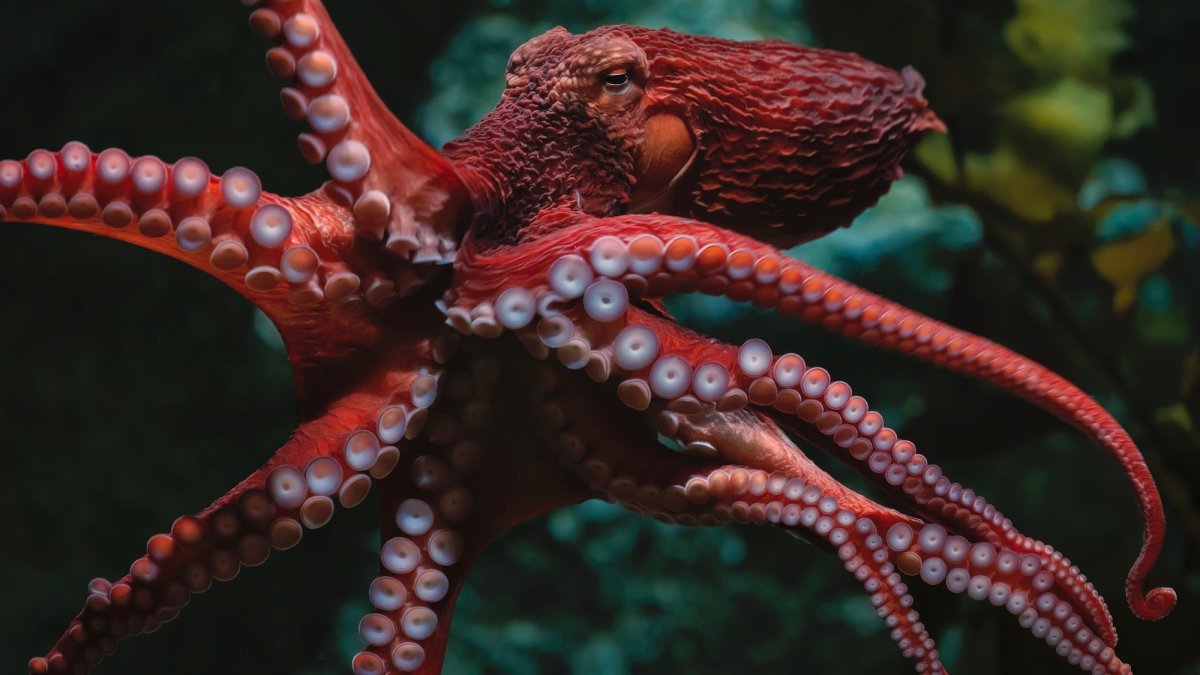
The Aquarium of the Pacific in Long Beach, California, uses a basket and positive reinforcement training to weigh Glinda, a giant Pacific octopus (Enteroctopus dofleini).
Measuring the weight of some animals presents unique challenges. Because some animals live in water, they cannot simply step on a scale.
According to a video shared by the Aquarium of the Pacific on Facebook, an aquarist named Brooke worked with Glinda to facilitate the process. The video demonstrates Glinda being scooped into the basket, which allows water to drain, and then passed to a second staff member who records the weight before returning the octopus to her exhibit.
The Role of Positive Reinforcement in Cephalopod Care
The process relies on positive reinforcement training, a method where specific behaviors are encouraged through rewards. Nate Jaros, the Aquarium of the Pacific vice president of animal care, fish and invertebrates, told Popular Science that the team incentivizes Glinda to participate in care tasks using special food items and unique enrichment toys.
Jaros noted that Glinda often prioritizes “playtime” over snacks, though the aquarium provides both.
By associating the basket with positive outcomes, the aquarium encourages the animal’s cooperation.
Why Weight Tracking Matters for Giant Pacific Octopuses
Tracking the growth curve of a giant Pacific octopus is essential for maintaining its health. Experts estimate Glinda is between one and 1.5 years old. Frequent weight checks allow biologists to ensure the animal is developing at a healthy rate.
Nate Jaros explained to Popular Science that accurate weight readings are critical for determining the correct diet. The 17-pound measurement helps the care team calibrate the amount of food Glinda receives.
While Glinda is currently 17 pounds, the ability to weigh her without struggle is a tool for the aquarium’s staff.
Safety and Physiology of Temporary Air Exposure
According to Nate Jaros, octopuses can temporarily be outside of water.
The process at the Aquarium of the Pacific is designed for speed. The transition from the exhibit to the scale and back takes only a matter of seconds, minimizing the time Glinda spends out of her aquatic environment.
The Aquarium of the Pacific continues to monitor Glinda’s development through these scheduled weigh-ins and enrichment activities.
Do you have experience with animal training or a favorite cephalopod fact? Share your thoughts in the comments below.
Worth a look