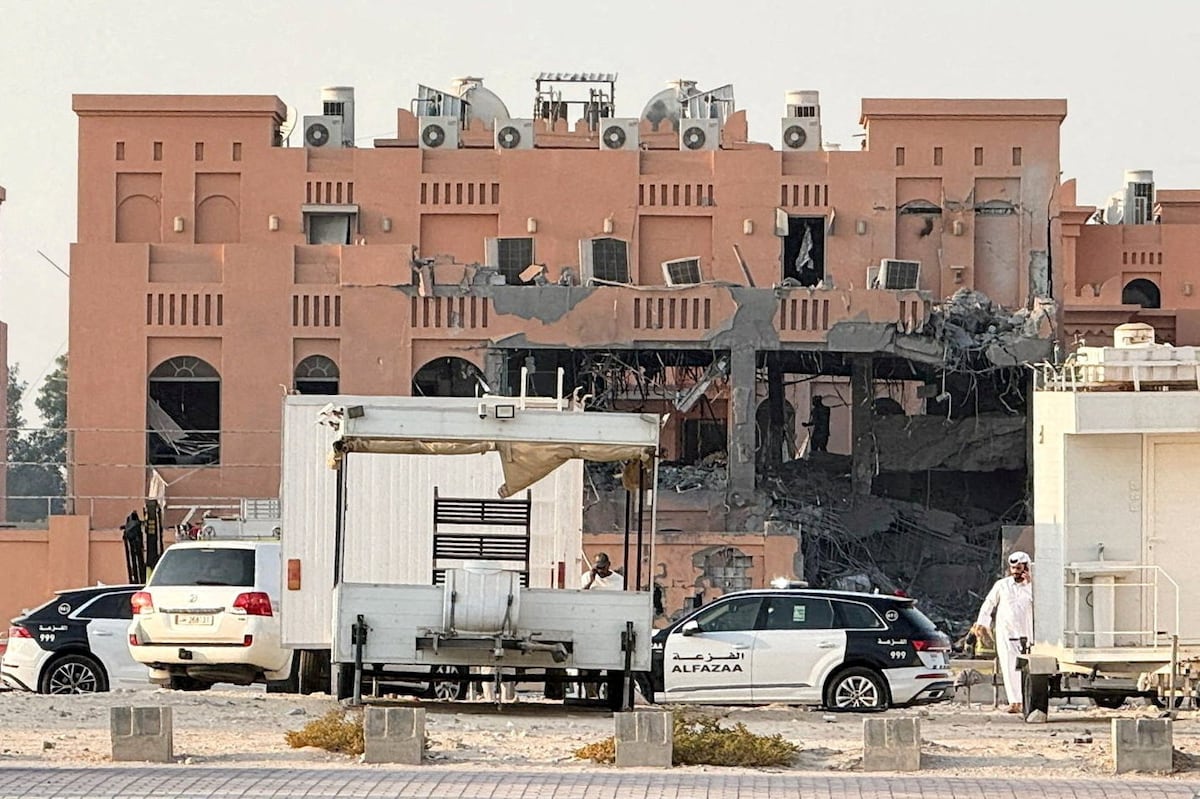
Qatar Bombing Escalates Regional Tensions, Raises Questions About U.S. Security Commitments
A recent, highly provocative strike within Qatar has sent shockwaves through the Middle East, dramatically escalating tensions and prompting urgent diplomatic efforts. The incident, reportedly carried out by Israel, targeted what appears to be a key location, and remarkably, occurred without detection or prevention by U.S. defense systems. This breach of security is raising serious questions about the effectiveness of American protection in the region and the future of strategic alliances.Several prominent regional leaders converged in doha on Wednesday to formulate a unified response to the Israeli action.These included the President of the United Arab Emirates, Mohamed bin Zayed Al Nahyan, and Jordan’s Prince Hussein. The arrival of Saudi Crown Prince Mohammed bin Salman is anticipated Thursday, signaling the gravity of the situation.
A Stark Condemnation & Regional Fallout
Saudi Arabia has issued a strong statement, characterizing the bombing as a “brutal aggression” and a clear violation of Qatar’s sovereignty. They warn of severe consequences for regional stability. Turkey, a key regional player and alongside Qatar, one of the few nations hosting Hamas offices, has voiced concerns that Israel is pursuing escalation rather than peace.You might be wondering how Qatar found itself in this position. For years, Qatar has strategically positioned itself as a crucial mediator in regional conflicts, specifically to avoid becoming a direct target. Now, a sense of disillusionment is growing, particularly directed toward the United States, perceived by many as failing to uphold its security commitments.
promises Broken? the U.S.-Qatar Understanding
Reports suggest that both the U.S. and Israel previously assured Qatar that Hamas leadership within its borders would not be targeted. This assurance came despite earlier statements from a senior Israeli military official,indicating a global pursuit of Hamas members. This apparent contradiction is fueling the current crisis of confidence.
The mood in Doha is described as a mixture of fear and anger. Citizens feel betrayed, believing their role as a mediator should have guaranteed their safety.However, experts suggest that a unified Arab response may be difficult to achieve, given the diverse interests of each nation.
ultimately, these nations may be forced to seek concessions from the U.S. to justify continuing their relationship.It’s a delicate balancing act, requiring careful diplomacy and a willingness to compromise.
Israel’s Potential Endgame: A path to De-escalation?
Some analysts believe Israel may have orchestrated the strike in Qatar as a means to break the stalemate in Gaza.The offensive there has reportedly stalled, and eliminating key Hamas leaders – figures well-known to the Israeli public – could provide Prime Minister Netanyahu with a face-saving “ramp” to accept a ceasefire agreement.
Though, initial reports suggest the operation may not have achieved its primary objective. This failure could make the conflict even more perilous. As one expert notes, Israel has a pattern of repeatedly crossing red lines once the initial barrier is breached. Escalation Risk: the attack on Qatar represents a significant escalation, potentially drawing in other regional actors.
U.S. Credibility: The incident raises serious questions about the reliability of U.S. security guarantees in the middle East.
Mediator Role: Qatar’s future as a mediator is now in doubt, potentially hindering efforts to resolve ongoing conflicts.
Gaza Stalemate: The attack may have been intended to break the deadlock in Gaza, but its success remains uncertain.
the situation remains fluid and highly volatile. You can expect continued diplomatic efforts, but the path forward is fraught with challenges. The bombing of Qatar has fundamentally altered the regional landscape, and the consequences will be felt for some time to come. It’s a stark reminder of the fragility of peace and the ever-present risk of escalation in the Middle East.
Worth a look