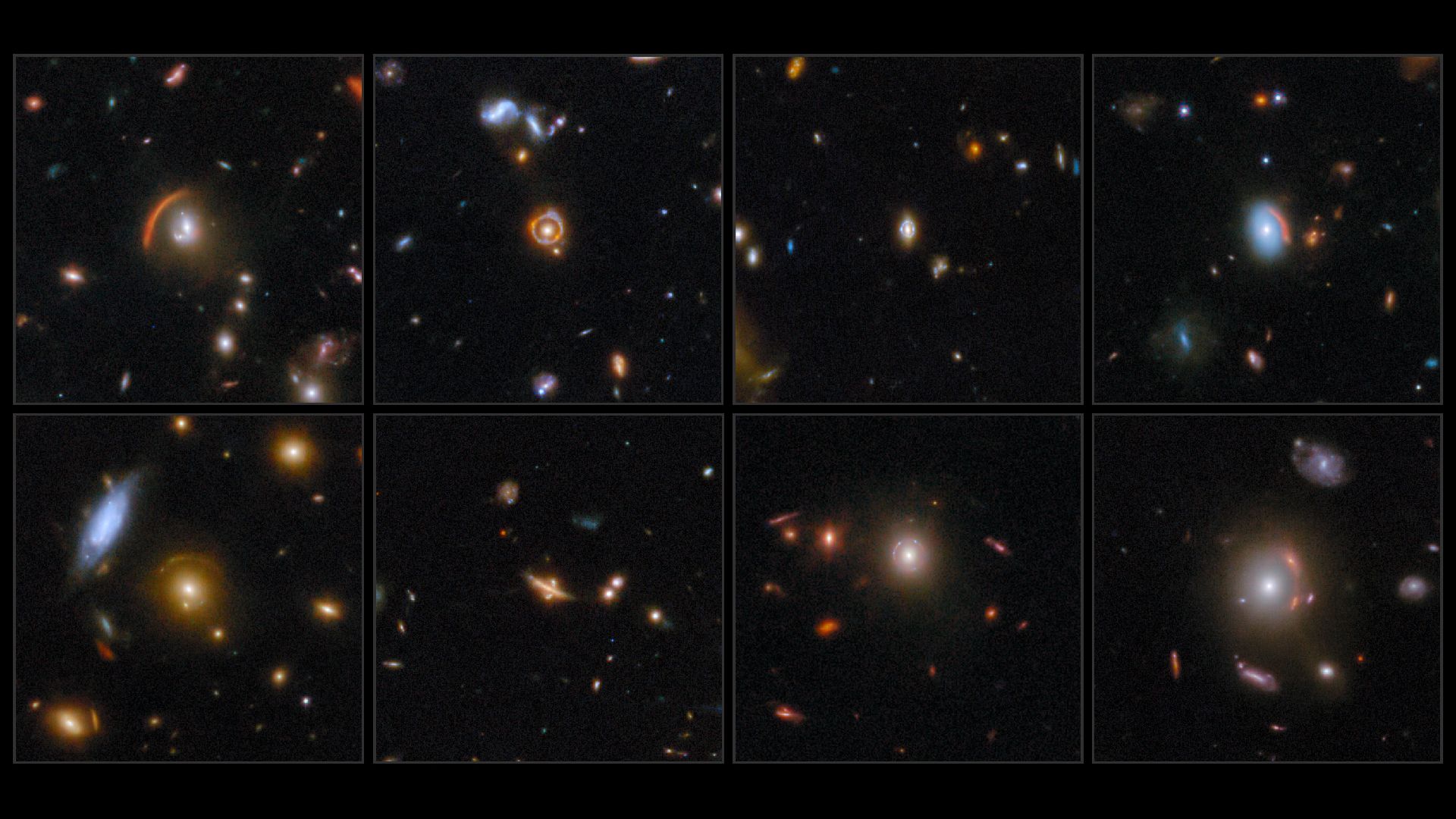
Unveiling the Early Universe: Stunning new Images from the James Webb space Telescope
the James Webb Space Telescope (JWST) continues to revolutionize our understanding of the cosmos, and a recent project has yielded breathtaking images of the early universe, thanks to a phenomenon called gravitational lensing. These images aren’t just beautiful; they’re providing unprecedented insights into the formation of galaxies and the nature of dark matter.
The Power of Gravitational lensing
Gravitational lensing occurs when the gravity of a massive object, like a galaxy cluster, bends and magnifies the light from galaxies far behind it.Think of it as a natural telescope, allowing astronomers to see farther and clearer than ever before. This effect does several key things:
* magnification: It amplifies the light from distant galaxies, making them visible.
* Clarity: It sharpens the images, revealing details previously hidden.
* Mass Measurement: It allows scientists to measure the mass of intervening galaxies,including the elusive dark matter.
COSMOS-Web: A Deep Dive into the Early Universe
These spectacular images originate from COSMOS-Web, a large-scale observing program utilizing JWST. Scientists dedicated 255 hours to observing over 42,000 galaxies, uncovering more than 400 potential “Einstein rings“-the telltale sign of strong gravitational lensing. Eight of these rings are particularly striking, offering a unique window into the universeS infancy.
One standout image showcases COSJ100024+015334, a nearly perfect Einstein ring.This reveals a galaxy as it existed just one billion years after the Big Bang, a mere fraction of the universe’s current 13+ billion-year age. It’s like looking back in time!
JWST’s Enhanced Vision: Beyond Hubble
While some of these galaxies were previously observed by the Hubble Space Telescope, JWST’s superior infrared vision unveils details hubble couldn’t detect. The telescope’s ability to see through dust and gas reveals previously hidden structures and allows for the finding of entirely new galaxies.
Notably, JWST has identified galaxies appearing distinctly red, a result of their immense distance and the dust obscuring their light. This discovery potentially points to a new class of cosmic objects, offering exciting avenues for future research.
Unlocking Cosmic Mysteries
These rare alignments created by gravitational lensing aren’t just visually stunning; they’re invaluable tools for astronomers. They allow us to study the fundamental building blocks of galaxies, star clusters, and even exploding stars.
Specifically,these observations are helping scientists understand:
* Galaxy Formation: How galaxies assembled in the early universe.
* Dark Matter’s Role: How dark matter influenced the structure of the cosmos.
* Early star Formation: The conditions that led to the birth of the first stars.
Ultimately, these images are providing crucial pieces of the puzzle in our quest to understand the origins and evolution of the universe.
Want to explore more unbelievable space imagery? Check out the Space Photo of the week archives. You can also stay updated on the latest discoveries by subscribing to our newsletter – get the world’s most fascinating discoveries delivered straight to your inbox!
Worth a look
- Rockefeller University Study Finds Sprinting Triggers Rapid Protein Shifts
- Managing Advanced Bladder Cancer Symptoms: Blood in Urine, Pain, and More
- LeBron James Launches YouTube Golf Channel with 2016 Cavs Reunion (archyde.com)
- Linda Király Celebrates Mother Gabi’s 70th Birthday with Rare Family Photo (world-today-news.com)