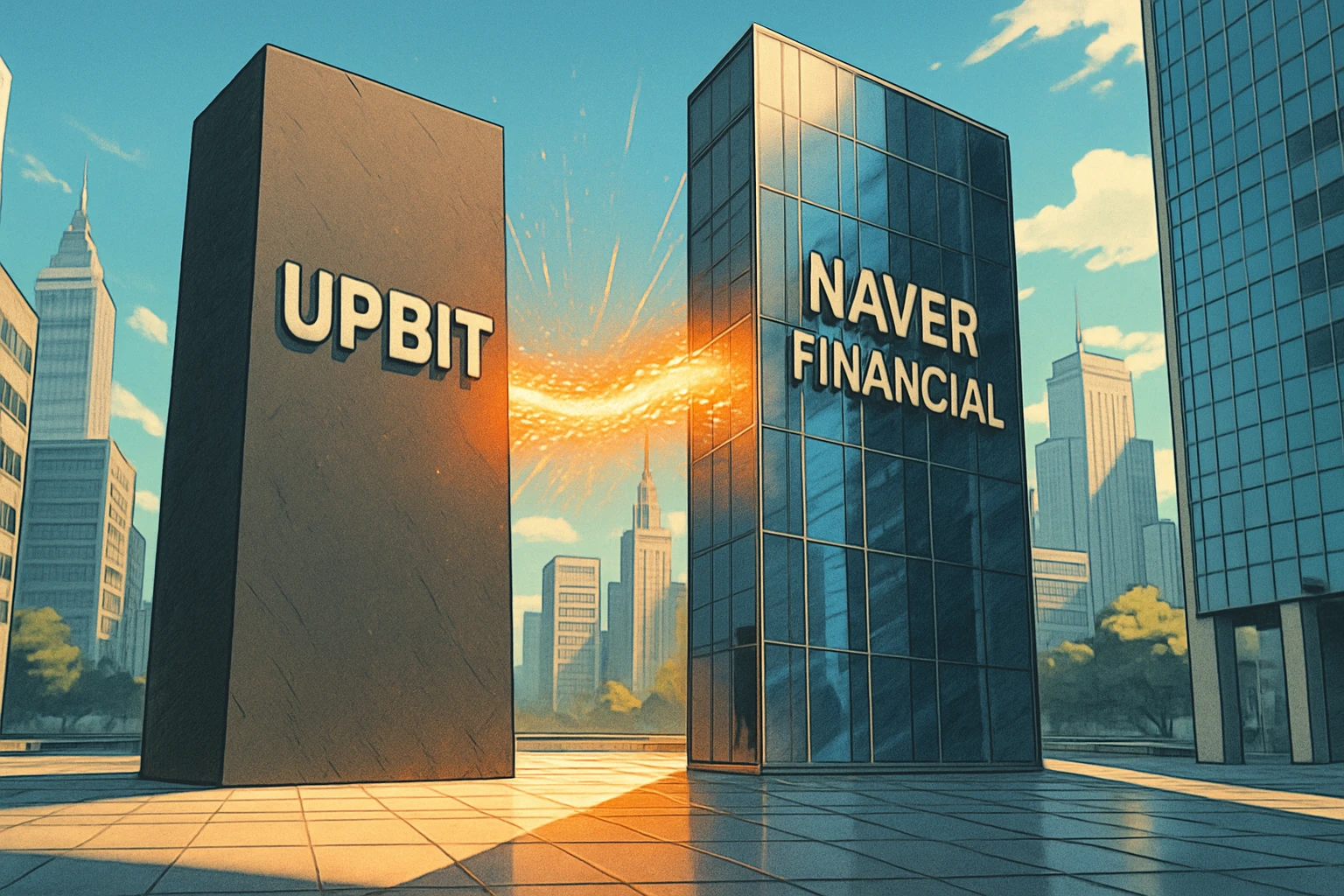
The landscape of South Korean fintech is bracing for a seismic shift as Naver, the country’s internet giant, prepares to take its financial arm public. In a strategic move that blends traditional digital payments with the volatile world of virtual assets, Naver has announced its intention to pursue a Naver Financial IPO following a comprehensive share swap with Dunamu, the powerhouse behind the Upbit cryptocurrency exchange.
This development, disclosed in a revised regulatory filing on April 15, 2026, signals a calculated effort to create a dominant force in the digital asset and payment ecosystem. By intertwining Naver’s massive user base and payment infrastructure with Dunamu’s market-leading crypto exchange, the resulting entity could fundamentally reshape how millions of users in Korea interact with money, from daily coffee purchases to high-stakes digital asset trading.
For those of us following the intersection of software architecture and financial systems, this is more than just a corporate merger; it is an attempt to build a unified “super-app” financial layer. The integration of Naver Pay and Upbit could potentially allow for a seamless transition between fiat currency and digital assets, potentially dominating over 70% of Korea’s crypto trading market.
The Roadmap to a 2031 Public Listing
The path to the public market is structured with a cautious, multi-year timeline, reflecting the complexities of merging a traditional fintech service with a cryptocurrency exchange operator. According to a revised regulatory filing on April 15, Naver plans to establish a dedicated IPO committee within one year of completing the share swap with Dunamu.

Once the share swap is finalized, Naver aims to list Naver Financial on the stock exchange within five years. Although, the company has built in a safety buffer, noting that this timeline could be extended by up to two additional years if delays occur. This flexible window suggests that the companies are mindful of the volatile nature of both the crypto market and the regulatory environment in South Korea.
Industry reports indicate that the ultimate goal for the Dunamu and Naver Financial merger is to successfully go public by 2031. While the broad timeline is set, both Naver and Dunamu have clarified that specific details regarding the execution plans, feasibility, and exact timing have not yet been finalized and will be disclosed as they are confirmed.
Strategic Synergy: Integrating Naver Pay and Upbit
The core of this strategy lies in the “comprehensive share swap” between Naver and Dunamu. In corporate finance, a share swap allows two companies to exchange equity, effectively linking their fortunes and aligning their long-term interests without necessarily requiring a massive cash outlay. For Naver, this provides a direct pipeline into the cryptocurrency market via Upbit, while Dunamu gains the institutional stability and massive retail reach of the Naver ecosystem.
The potential impact on the Korean market is staggering. The combination of Naver Pay’s payment ubiquity and Upbit’s trading volume could create a near-monopoly on digital asset access for the general public. This synergy is designed to reshape not just payments, but the very way digital assets are utilized in everyday commerce.
This vision was previously highlighted during a joint press conference held on November 27, 2025, at Naver 1784 in Seongnam, Gyeonggi Province. The event featured key leadership, including Naver Chairman Lee Hae-jin and Naver Pay CEO Park Sang-jin, underscoring the high-level commitment to this integration.
Governance, Voting Rights, and Market Risks
Despite the move toward an IPO, Naver is not relinquishing control. The company has stated that it plans to secure voting rights in Naver Financial through specific shareholder agreements. This ensures that while the entity becomes a public company, Naver maintains strategic direction, keeping Naver Financial as a consolidated subsidiary.
However, the road to 2031 is not without significant hurdles. The merger and subsequent IPO face several critical risks:
- Regulatory Approvals: The South Korean government maintains strict oversight of both financial services and virtual asset exchanges. Securing the necessary permits for such a massive consolidation of payment and crypto power will be a primary challenge.
- Security Concerns: Recent security issues within the industry have placed a spotlight on the necessity of robust infrastructure. Any breach during the integration phase could jeopardize the IPO timeline.
- Market Conditions: The broader economic climate remains a factor. Other major industry players, such as Kraken, have delayed their own IPO plans due to weak market conditions, suggesting that the window for a successful listing can open and close rapidly.
Key Timeline and Details
| Milestone | Timeline/Detail |
|---|---|
| Regulatory Filing Date | April 15, 2026 |
| IPO Committee Establishment | Within 1 year of share swap completion |
| Target Listing Date | Within 5 years of share swap (extendable by 2 years) |
| Final IPO Target Year | 2031 |
| Estimated Market Dominance | Over 70% of Korea’s crypto trading |
As a journalist with a background in computer science, I find the technical implications of this merger particularly fascinating. Integrating a high-frequency trading engine like Upbit’s with a consumer-facing payment gateway like Naver Pay requires immense synchronization in API management and security protocols. If executed correctly, this could set a global precedent for how “Big Tech” integrates blockchain assets into mainstream retail finance.

The next critical checkpoint for investors and observers will be the official completion of the share swap, which will trigger the one-year countdown to the establishment of the IPO committee. We will continue to monitor the regulatory filings for updates on the shareholder agreements and the formalization of the IPO committee.
Do you reckon the integration of crypto exchanges into mainstream payment apps is the future of finance, or does it introduce too much risk for the average consumer? Let us realize your thoughts in the comments below and share this analysis with your network.
Keep reading