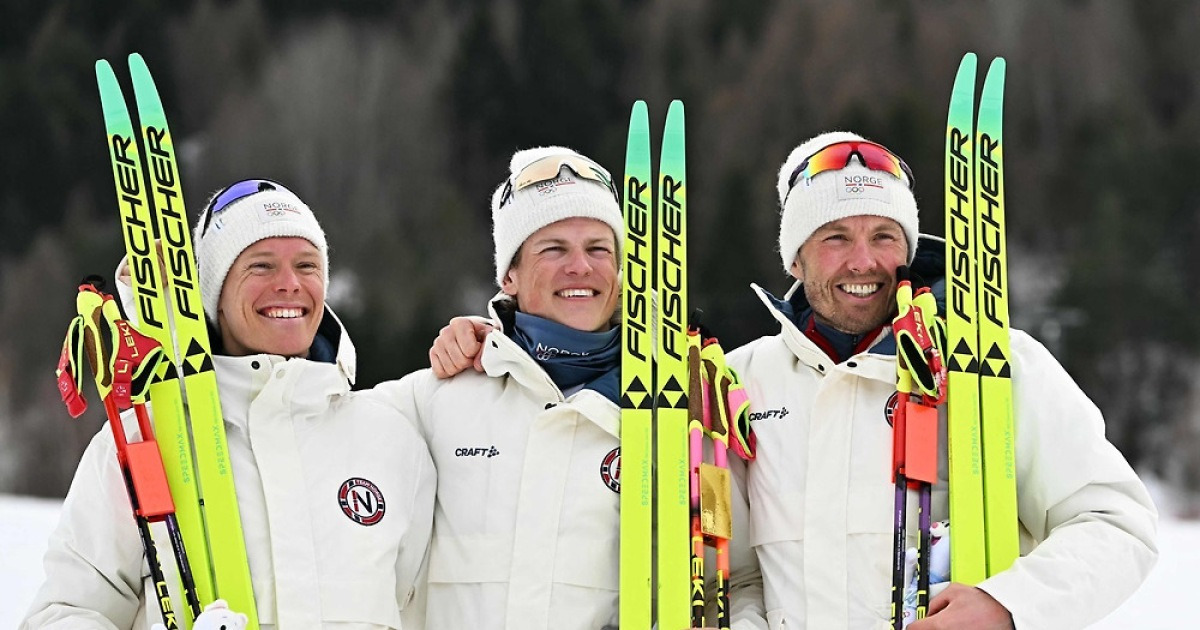
Milan/Cortina d’Ampezzo, Italy – Norway has cemented its dominance on the world stage, securing a historic victory at the 2026 Winter Olympics with a total of 18 gold medals. This achievement marks the fourth consecutive Winter Games where Norway has topped the medal table, a feat unmatched in the history of the competition. The milestone was confirmed on February 21st, a day before the closing ceremony, following a resounding performance in the men’s 50km mass start classic cross-country ski event where Norwegian athletes swept the podium, claiming gold, silver and bronze.
The Norwegian team’s performance at the Milan-Cortina d’Ampezzo Games has been nothing short of spectacular, amassing a total of 40 medals – 18 gold, 11 silver, and 11 bronze. This surpasses the previous record of 39 medals set at the 2018 Pyeongchang Winter Olympics. The success is a testament to the nation’s long-standing commitment to winter sports and a robust system for developing elite athletes. The overall victory underscores Norway’s position as a global powerhouse in winter sports, a status they have consistently maintained and now elevated to unprecedented heights.
A Record-Breaking Performance
Norway’s 18 gold medals represent a new benchmark for the most gold medals won at a single Winter Olympics, exceeding the previous record of 16 set at the 2022 Beijing Games. This accomplishment is particularly significant as it demonstrates a sustained level of excellence across multiple disciplines. The team’s success wasn’t limited to a single sport; medals were won in cross-country skiing, biathlon, ski jumping, speed skating, and more, showcasing a broad base of athletic talent. The consistent performance across various events highlights the depth and quality of Norway’s winter sports programs.
Johannes Klebo’s Historic Run
Leading the charge for Norway was cross-country skiing superstar Johannes Klebo, who enjoyed a phenomenal Games, securing an impressive six gold medals. Starting with the men’s 20km skiathlon on February 8th, Klebo dominated his events, adding gold medals in the sprint classic, 10km interval start free, 4 x 7.5km relay, team sprint, and the grueling 50km mass start classic. His performance surpassed that of American speed skater Eric Heiden, who won five gold medals at the 1980 Lake Placid Games, establishing a new record for the most gold medals won by an athlete at a single Winter Olympics. Klebo now boasts a total of 11 career gold medals at the Winter Olympics, further solidifying his legacy as one of the greatest cross-country skiers of all time.
The United States’ Strong Showing
While Norway dominated the medal count, the United States also delivered its best performance in Winter Olympics history. The American team surpassed its previous best of 10 gold medals achieved at the 2002 Salt Lake City Games, demonstrating significant progress in several winter sports. Despite a valiant effort, including a potential showdown in the men’s ice hockey final against Canada on February 22nd, the United States will not be able to overtake Norway in the overall standings. The U.S. Team’s performance signals a growing investment and commitment to winter sports within the country, and a promising future for American athletes on the world stage.
Remaining Events and Final Standings
As the Games draw to a close on February 22nd, five gold medals remain up for grabs in men’s ice hockey, men’s four-man bobsled, women’s curling, women’s freestyle skiing halfpipe, and women’s cross-country skiing 50km mass start classic. Even if the United States were to win gold in all events except women’s curling – where they did not qualify for the finals – they would still fall short of Norway’s total. This confirms Norway’s unassailable lead and their historic fourth consecutive overall victory at the Winter Olympics.
A Legacy of Winter Sports Excellence
Norway’s success at the Winter Olympics is deeply rooted in its culture and geography. The country’s mountainous terrain and long winters provide ideal conditions for winter sports, fostering a passion for skiing, skating, and snowboarding from a young age. This, combined with a well-funded and highly effective sports system, has consistently produced world-class athletes. Norway’s previous overall titles came at the Sochi 2014 Games (11 gold, 6 silver, 10 bronze), the Pyeongchang 2018 Games (14 gold, 14 silver, 11 bronze), and the Beijing 2022 Games (16 gold, 8 silver, 13 bronze). This latest victory solidifies Norway’s position as the most successful nation in Winter Olympics history, with a total of 11 overall titles.
The 2026 Milan-Cortina d’Ampezzo Winter Olympics will be remembered as a Games dominated by Norway, particularly by the extraordinary achievements of Johannes Klebo. As the Games conclude, attention turns to the future of winter sports and the next generation of athletes who will strive to emulate the success of the Norwegian team. The final events on February 22nd will provide a fitting end to a thrilling competition, but the legacy of Norway’s dominance will undoubtedly endure.
The men’s ice hockey final between the United States and Canada on February 22nd will be a key event to watch, as the U.S. Seeks to add to its medal tally and potentially secure its best-ever performance at a Winter Olympics. The United States’ last men’s ice hockey championship was at the 1980 Lake Placid Games, adding extra significance to this highly anticipated matchup.
As the curtain falls on the 2026 Winter Olympics, the world looks ahead to the next Games, scheduled to be held in 2030. The location has yet to be determined, but the competition promises to be another showcase of athletic excellence and international camaraderie. Stay tuned for further updates and analysis as the world of winter sports continues to evolve.
What are your thoughts on Norway’s historic performance? Share your comments below and join the conversation!
Keep reading