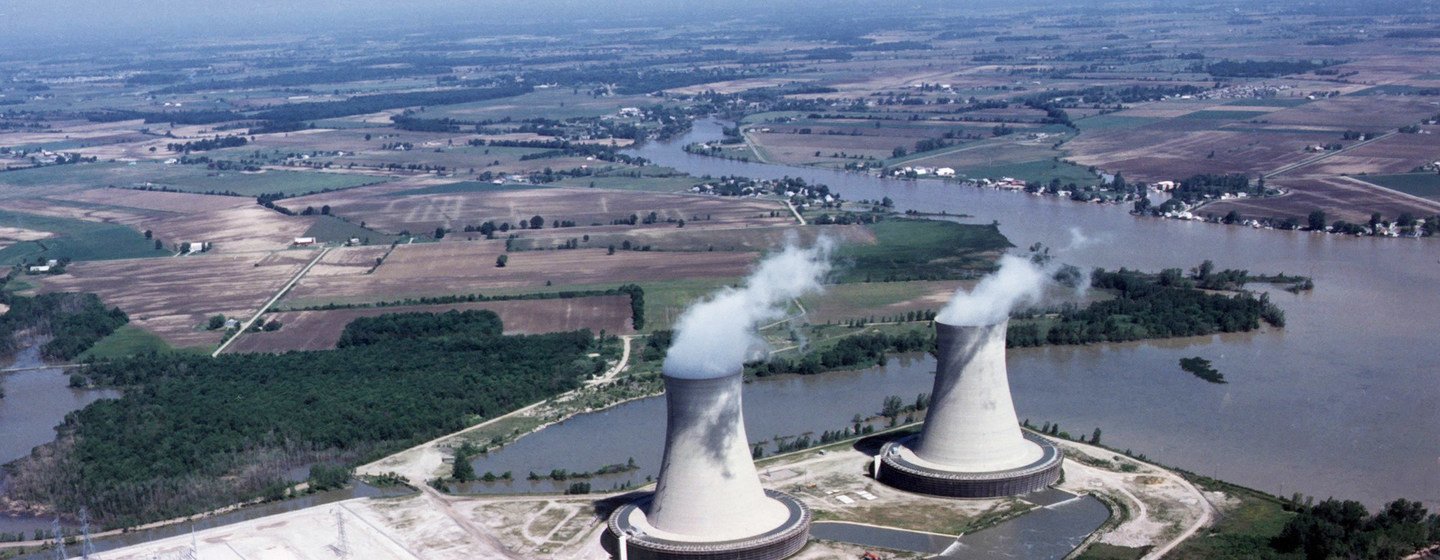
For decades, the Middle East has been the world’s primary engine for hydrocarbon energy. However, a quiet but profound transition is underway. From the coastal plains of the United Arab Emirates to the shores of Egypt’s Mediterranean coast, nations are increasingly viewing nuclear energy in the Middle East not as a luxury, but as a strategic necessity for economic diversification and climate resilience.
This pivot is driven by a complex intersection of growing domestic electricity demand, the global imperative to reduce carbon emissions, and a desire to preserve oil and gas reserves for export rather than burning them for local power. Yet, the introduction of nuclear technology into one of the world’s most geopolitically volatile regions brings an inherent paradox: the same technology that promises sustainable development also raises acute concerns regarding nuclear non-proliferation and regional security.
As the International Atomic Energy Agency (IAEA) works to implement rigorous safeguards, the region is becoming a testing ground for whether nuclear power can serve as a bridge to a low-carbon future or if it will exacerbate existing tensions. The stakes involve more than just electricity; they encompass national sovereignty, international diplomacy, and the very stability of the global nuclear order.
The Strategic Shift Toward Low-Carbon Power
The drive toward nuclear energy is closely tied to the “energy transition” goals articulated at recent global summits. During the COP28 climate conference in Dubai, a significant coalition of 22 countries pledged to triple their global nuclear energy capacity by 2050 to meet net-zero targets, recognizing nuclear power as a critical provider of stable, baseload electricity that complements intermittent renewables like wind and solar IAEA COP28 Update.
For Middle Eastern states, the motivation is twofold. First, the region faces some of the fastest-growing electricity demands in the world, driven by rapid urbanization and the energy-intensive requirements of water desalination. Second, by shifting domestic power generation to nuclear, these nations can maximize their revenue from fossil fuel exports. This “export-optimization” strategy allows states to maintain their position in the global energy market while cleaning up their internal energy profiles.
However, this transition is not without technical hurdles. The region’s extreme heat and scarcity of freshwater create a “water-energy nexus” challenge. Traditional nuclear reactors require massive amounts of water for cooling, which in arid climates often means relying on seawater or expensive desalination processes, adding layers of engineering complexity and cost to every project.
Regional Anchors: The Barakah and El Dabaa Projects
The United Arab Emirates has set the regional benchmark with the Barakah Nuclear Energy Plant. This project represents a sophisticated approach to nuclear adoption, utilizing the “Gold Standard” of non-proliferation. Under a 123 Agreement with the United States, the UAE committed to not enrich uranium or reprocess spent fuel domestically, effectively removing the technical pathways to weaponization U.S. Department of State.
The Barakah plant consists of four APR-1400 reactors, which together provide a total capacity of approximately 5.6 gigawatts (GW), contributing a significant portion of the UAE’s electricity needs and reducing millions of tons of carbon emissions annually. The project’s success has served as a proof-of-concept, demonstrating that a Middle Eastern nation can operate a large-scale nuclear program while maintaining transparent relations with international regulators.

Further north, Egypt is pursuing a similar ambition with the El Dabaa nuclear power plant. In a strategic partnership with Russia’s state nuclear corporation, Rosatom, Egypt is constructing four VVER-1200 reactors. Once completed, the plant is expected to have a total installed capacity of 4,800 megawatts (MW), making it a cornerstone of Egypt’s integrated sustainable energy strategy UN News.
While the UAE looked toward South Korean technology and U.S. Diplomatic frameworks, Egypt’s reliance on Russian technology highlights the diversifying landscape of nuclear diplomacy. The involvement of various global powers—the U.S., Russia, South Korea, and China—in Middle Eastern nuclear projects reflects a broader competition for influence in the region’s energy infrastructure.
Small Modular Reactors and the Future of Grid Stability
While massive plants like Barakah and El Dabaa provide the bulk of the power, the region is increasingly exploring Small Modular Reactors (SMRs). These are advanced reactors with a capacity typically up to 300 MW per unit, which can be manufactured in factories and shipped to a site for installation.
SMRs offer several advantages for the Middle East:
- Scalability: They can be added incrementally as demand grows, reducing the massive upfront capital risk associated with traditional “gigawatt-scale” plants.
- Versatility: SMRs are better suited for remote areas or for integrating with industrial processes, such as hydrogen production or high-efficiency desalination.
- Safety: Many SMR designs utilize passive safety systems that do not require operator intervention or external power to shut down safely in an emergency.
Saudi Arabia, in particular, has expressed interest in incorporating SMRs into its “Vision 2030” framework. By diversifying the types of nuclear technology deployed, the Kingdom aims to create a resilient grid that can balance the variability of its massive solar investments with the steady output of nuclear power.
The Proliferation Puzzle and IAEA Safeguards
The primary risk associated with nuclear energy in the Middle East is the potential for “nuclear hedging”—the practice of developing the civilian infrastructure necessary to produce nuclear energy, which could then be rapidly pivoted toward a weapons program. In a region marked by intense rivalry, the fear is that one nation’s pursuit of energy security could trigger a nuclear arms race.
To mitigate this, the International Atomic Energy Agency (IAEA) employs a “Milestones Approach,” a comprehensive framework that guides newcomer countries through the legal, regulatory, and technical requirements of starting a nuclear program. This includes the implementation of comprehensive safeguards agreements and the Additional Protocol, which grants the IAEA expanded rights to verify that nuclear materials are not being diverted for military use IAEA Milestones Approach.
The challenge for the IAEA is maintaining a consistent standard across different political regimes. While the UAE’s model is highly transparent, other regional actors may seek more autonomy over their fuel cycles, including domestic enrichment. The tension between the “right to peaceful nuclear energy” and the global need for non-proliferation remains the central diplomatic friction point in the region.
The Water-Energy Nexus in Arid Climates
Nuclear energy is often touted as a solution to water scarcity, but it also depends on it. In the Middle East, the relationship between electricity and water is symbiotic: nuclear power can drive the desalination plants that provide drinking water, but those same reactors need water for cooling.

To solve this, engineers are deploying advanced cooling technologies. Many new plants use seawater cooling systems, but these require sophisticated filtration to prevent marine biofouling and must manage the thermal impact of discharging warm water back into the ocean. There is growing interest in “dry cooling” technologies, which use air instead of water, although these are generally less efficient and more expensive to implement.
The ability to integrate nuclear power with desalination—creating “nuclear-desalination hubs”—could revolutionize regional water security. By replacing gas-fired desalination with nuclear-powered versions, countries can drastically reduce the carbon footprint of their water supply while ensuring a steady flow of fresh water regardless of weather patterns.
Key Takeaways: Nuclear Energy in the Middle East
- Economic Drivers: Nations are shifting to nuclear to free up oil and gas for export and meet surging domestic electricity demands.
- Climate Goals: The region is aligning with global targets, such as the COP28 pledge to triple nuclear capacity by 2050, to reach net-zero emissions.
- Security Frameworks: The “Gold Standard” (as seen in the UAE) and IAEA safeguards are critical in preventing the transition from civilian power to military capability.
- Technological Evolution: A shift toward Small Modular Reactors (SMRs) is expected to provide more flexible and scalable energy solutions.
- Environmental Trade-offs: While reducing carbon, nuclear power requires innovative cooling solutions to operate in arid, water-stressed environments.
The trajectory of nuclear energy in the Middle East will likely be determined by the success of current flagship projects and the ability of regional powers to maintain a transparent, safeguards-based approach to technology. As more countries move from the planning phase to operational reality, the region’s energy landscape will shift from a reliance on what is beneath the ground to a reliance on the sophisticated technology used to generate power.
The next critical checkpoint for the region will be the continued commissioning of units at the El Dabaa plant in Egypt, which will serve as a primary indicator of the viability of large-scale Russian-led nuclear projects in the Mediterranean basin.
Do you believe nuclear energy is the most viable path for the Middle East’s energy transition, or do the security risks outweigh the benefits? Share your thoughts in the comments below.
Worth a look