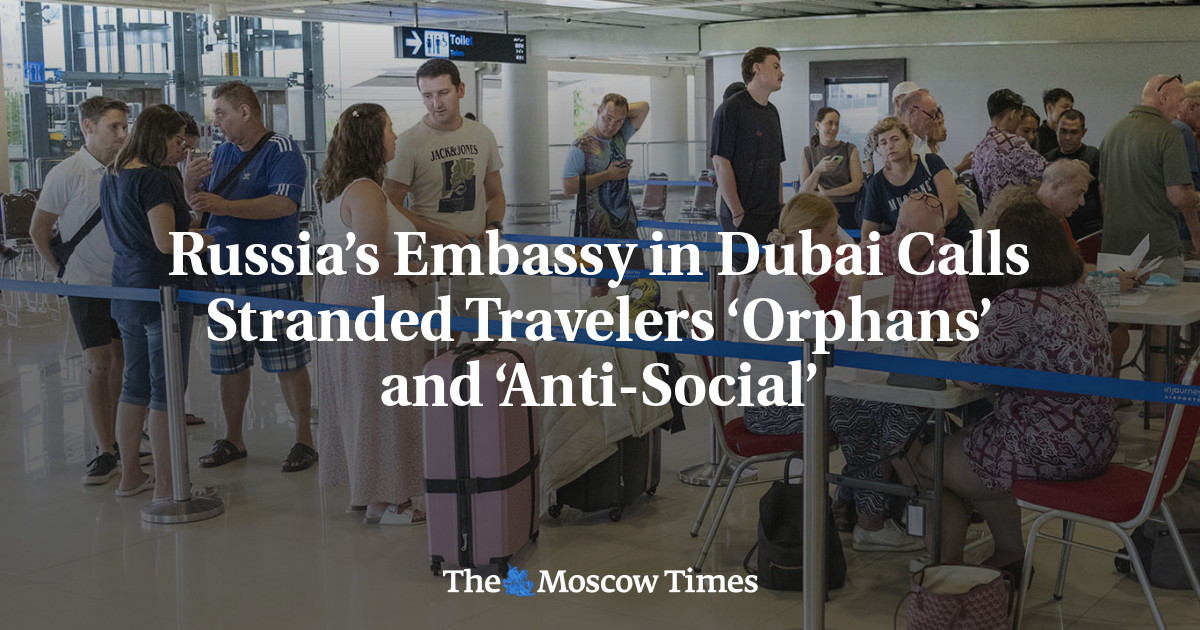
The Russian Consulate General in Dubai has sparked controversy after publishing an infographic intended to assist Russian tourists stranded in the United Arab Emirates, but which contained language described as insensitive and demeaning. The image, posted on the consulate’s Telegram channel, referred to some tourists as “orphans” and “anti-social people,” a phrasing that has drawn criticism and raised questions about the consulate’s approach to assisting its citizens amid ongoing travel disruptions.
The situation stems from the temporary closure of airspace in the Middle East following escalating tensions and strikes in the region. On Saturday, the UAE announced a partial closure of its airspace as a precautionary measure, impacting flights to and from several destinations. While limited flights resumed at Dubai and Abu Dhabi airports on Monday evening, tens of thousands of Russian tourists remain stranded, according to estimates from the Russian Foreign Ministry. The disruption has left many travelers scrambling for alternative routes home, and facing unexpected costs for accommodation and sustenance.
The infographic, intended as guidance for those unable to secure return flights, included a section labeled “extreme scenario” that addressed tourists described as “orphans or anti-social people with no friends or acquaintances.” This sentence was crossed out in the image, but remained legible. Following this, the infographic offered instructions for those lacking the financial means to continue staying in hotels, directing them to contact the consulate for assistance with “no-frills” accommodation. The consulate stated that individuals facing eviction from their hotels with no funds should email a brief description of their situation. This unusual phrasing and the crossed-out descriptor have fueled public debate and prompted questions about the consulate’s messaging.
Airspace Closures and the Stranded Tourist Population
The current travel crisis is a direct consequence of heightened regional instability. The UAE’s decision to temporarily close its airspace followed strikes by Iran in response to earlier attacks by the United States and Israel. Reuters reported that Russian President Vladimir Putin will relay complaints from UAE President Sheikh Mohammed bin Zayed Al Nahyan regarding the Iranian strikes to Tehran, signaling diplomatic efforts to address the escalating tensions. Beyond the UAE, airspace closures were also reported in Iran, Iraq, Israel, Syria, Kuwait, and Qatar, further complicating travel arrangements throughout the region.
The Russian Foreign Ministry estimates that over 20,000 Russian tourists are currently stranded in the UAE, with an additional 500 affected in other Gulf countries. This large number presents a significant logistical challenge for the Russian government and its consular services. The government of Abu Dhabi has pledged to cover the costs of accommodation for tourists unable to depart on their scheduled checkout dates, offering some relief to those affected. However, the situation remains fluid, and many tourists continue to face uncertainty regarding their return travel.
The Consulate’s Controversial Infographic
The infographic posted by the Russian Consulate in Dubai, available on its Telegram channel (dubai_mid/173), aimed to provide guidance to stranded tourists. However, the inclusion of the phrase “orphans or anti-social people with no friends or acquaintances” sparked immediate backlash. The phrasing, even with the crossed-out appearance, was widely perceived as insensitive and belittling to those already facing a stressful situation. The intent behind the language remains unclear, and the consulate has not yet issued a public explanation.
The infographic outlined a process for tourists with limited financial resources to seek assistance from the consulate. It instructed those facing eviction from their hotels and lacking funds to email a description of their circumstances. This suggests the consulate is prepared to offer some form of support, but the initial presentation of that support was overshadowed by the controversial language. The employ of an AI-generated image has also been noted, raising questions about the quality control and sensitivity review processes within the consulate.
Diplomatic Implications and Tourist Assistance
The incident raises broader questions about the provision of consular services and the treatment of citizens abroad. While consular officials often face challenging circumstances, maintaining a respectful and empathetic tone is crucial when assisting citizens in distress. The Russian Consulate’s approach has been criticized for its perceived lack of sensitivity and its potentially stigmatizing language. The situation also highlights the vulnerability of tourists during times of geopolitical instability and the importance of robust contingency plans for managing travel disruptions.
The UAE’s partial resumption of flights at Dubai and Abu Dhabi airports offers a glimmer of hope for stranded travelers. However, the ongoing regional tensions and the potential for further airspace closures mean that the situation remains precarious. The Russian government is likely to face continued pressure to provide effective assistance to its citizens stranded in the Gulf region. The incident also underscores the importance of travel insurance and preparedness for unexpected disruptions when traveling internationally.
Challenges for Travelers in the Middle East
Beyond the immediate issue of stranded tourists, the broader context of the Middle East conflict is creating significant challenges for travelers. Newsday reports that tennis stars participating in the Dubai Tennis Championships and Paralympians traveling to events in the region are also facing travel difficulties. The disruptions are impacting not only leisure travelers but also athletes and individuals with critical commitments.
The potential for further escalation of the conflict raises concerns about the safety of air travel throughout the region. Live and Let’s Fly has questioned whether Middle Eastern airports could turn into ongoing targets, and whether European airports might face similar risks. While such scenarios remain speculative, they underscore the heightened level of uncertainty surrounding air travel in the region.
The Russian Consulate in Dubai has not yet responded to requests for comment regarding the controversial infographic. The situation remains under development, and further updates are expected as the UAE continues to restore flight operations and as diplomatic efforts to de-escalate regional tensions progress. Travelers planning to visit the Middle East are advised to stay informed about the latest travel advisories and to exercise caution.
Key Takeaways:
- Thousands of Russian tourists are stranded in the UAE and other Gulf countries due to airspace closures related to regional conflict.
- The Russian Consulate in Dubai published an infographic with guidance for stranded tourists, but it included language described as insensitive and demeaning.
- The UAE has partially resumed flights at Dubai and Abu Dhabi airports, but the situation remains fluid.
- Travelers in the Middle East are facing significant disruptions and uncertainty due to the ongoing conflict.
The situation will continue to evolve as regional tensions persist. We will continue to monitor developments and provide updates as they become available. Share your experiences and perspectives in the comments below.
Related reading