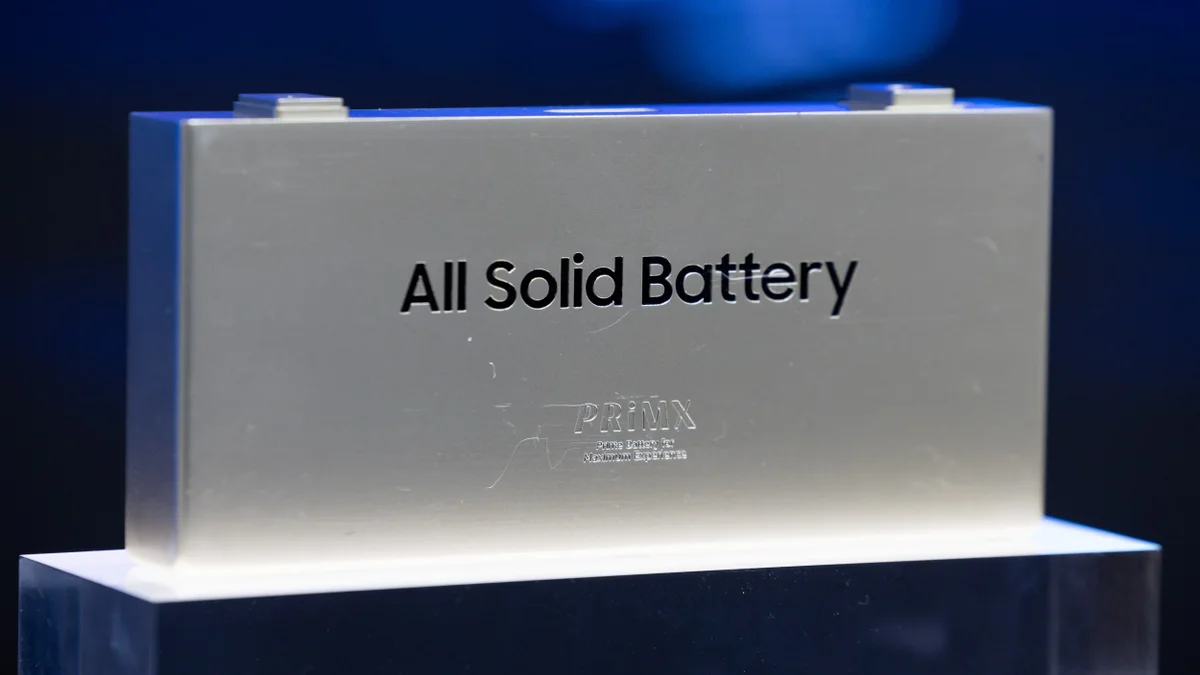
Samsung’s Solid-State Battery Plans: A Deep Dive
Samsung is heavily invested in developing solid-state battery technology,aiming to revolutionize its mobile devices and beyond. While initial timelines have faced challenges, recent developments suggest a potential debut in wearables as early as 2024, with broader implementation in smartphones like the Galaxy S27 series a possibility.This article explores the current state of Samsung’s solid-state battery development, potential benefits, and expected timelines.
What are Solid-State Batteries?
Conventional lithium-ion batteries use a liquid electrolyte to transport ions between the cathode and anode. Solid-state batteries, as the name suggests, replace this liquid electrolyte with a solid material – ofen ceramic, glass, or polymers. This basic change offers several advantages:
- Increased Energy Density: Solid electrolytes allow for the use of higher-voltage and higher-capacity materials, leading to batteries that can store more energy in the same space.
- Enhanced Safety: Liquid electrolytes are flammable, posing a safety risk. Solid electrolytes are non-flammable, considerably reducing the risk of fires or explosions.
- Faster Charging: Solid-state batteries can handle higher charging currents, enabling significantly faster charging times.
- Longer Lifespan: Solid-state batteries are expected to have a longer cycle life, meaning they can be charged and discharged more times before degrading.
Samsung’s Progress and Timelines
Samsung has been actively researching and developing solid-state battery technology for several years. In 2023, the company announced advancements in its solid-state battery development, including a prototype with an extraordinary energy density and charging speed. Samsung Newsroom
Initial plans aimed for a 2025 launch, but challenges in scaling production and maintaining cost-effectiveness have led to adjustments. currently, the most likely scenario is a debut in wearable devices at Mobile World Congress (MWC) 2024 in Barcelona. PhoneArena
While the Galaxy S26 is unlikely to feature solid-state batteries, samsung is targeting the Galaxy S27 series (expected in 2026) as a potential launch platform, contingent on prosperous integration into wearables and continued progress in mass production. PhoneArena
Challenges Remain
Despite the notable progress, several hurdles remain before solid-state batteries become commonplace:
- Manufacturing Costs: Producing solid electrolytes and assembling solid-state batteries is currently more expensive than traditional lithium-ion batteries.
- Scalability: Scaling up production to meet the demands of the consumer electronics market is a significant challenge.
- Interface resistance: Ensuring good contact between the solid electrolyte and the electrodes is crucial for performance and longevity.
- Dendrite Formation: While less prone to dendrite formation than liquid electrolytes, some solid electrolytes can still experience this issue, leading to battery failure.
What to Expect from First-Generation Solid-State Batteries
The first generation of solid-state batteries in Samsung devices will likely offer similar battery life to current lithium-ion batteries.However,the key advantage will be significantly faster charging times – possibly reducing charging from hours to minutes. This improvement alone would be a major step forward for user experience.
Looking ahead
Samsung’s commitment to solid-state battery technology is unwavering. The company continues to invest heavily in research and development, aiming to overcome the remaining challenges and bring this promising technology to market. The successful integration of solid-state batteries into wearables will be a crucial stepping stone towards their wider adoption in smartphones and other devices. The future of energy storage is looking brighter, and Samsung is poised to be a leader in this exciting field.
Worth a look