
New San Jose State University research shows a key section of the northern San Andreas Fault in the Santa Cruz Mountains is slipping faster than previously thought, maintaining a steady rate over 10,000 years that suggests earthquake potential is higher in the region than earlier estimates indicated.
Sanborn County Park Research Reveals Faster Fault Slip Rates
A major earthquake just south of the San Francisco Bay Area is more likely than previously thought, according to a geology study conducted by researchers at San Jose State University. Investigators surveyed terrain and rock formations at Sanborn County Park in Saratoga, where the San Andreas Fault runs directly underneath.
The study centers on the Santa Cruz Mountains section of the northern San Andreas Fault, examining how quickly the tectonic plates move past one another. While prior slip rate investigations in the area looked back roughly 1,000 years, San Jose State University professor Kim Blisniuk and her students expanded the timeline to 10,000 years using field measurements and laboratory dating.
“And so the great aspect of this work is that it is a rate of which the landform preserves previous earthquakes along the fault, And the rate is similar to the rate that we get for the San Andreas Fault to the north in the north coast section. But prior to the work that my colleagues and I did at Sanborn County Park, the rate appears to not decrease along the San Andreas Fault, but it appears to be constant over this 10,000-year window that we were able to document.”
Kim Blisniuk, Professor of Geology at San Jose State University, via ABC7
Challenging Long-Held Hypotheses About Fault Energy Transfer
For years, scientists theorized that the slip rate of the northern San Andreas Fault would slow down as it extended farther south. One leading hypothesis suggested that slip is then being transferred onto other faults, such as the Calaveras or Hayward faults running through the East Bay.
However, the new findings indicate that the slip rate did not decrease but actually stayed the same from the North Coast section down to the Santa Cruz Mountains. Because faults with higher slip rates will have more frequent earthquakes and a probability of one, the research alters how geologists assess seismic risk in the Bay Area.
The United States Geological Survey declined to comment on the findings because the research has not yet been formally published or peer-reviewed. Blisniuk plans to present the data at a scientific conference in October.
Drones, Lasers, and Beryllium-10 Dating in Saratoga
To calculate the movement, researchers walked the San Andreas Trail at Sanborn County Park, located roughly 20 miles northwest of the epicenter of the 1989 Loma Prieta earthquake. The team spotted geological markers such as a seasonal stream deflected into two 90-degree turns, signaling past tectonic shifts.
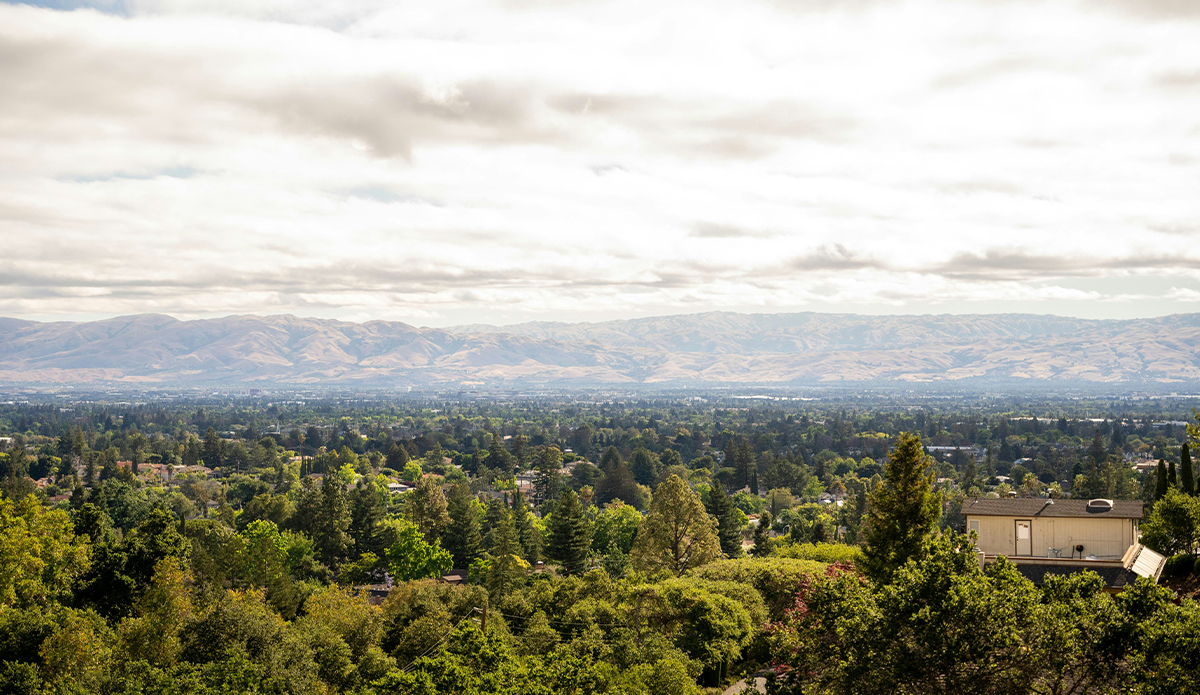
The investigators deployed drones equipped with cameras and laser pulses to measure how far past earthquakes displaced the landscape. Afterward, they gathered sandstone boulder samples from the park to determine their exposure age.
When cosmic rays from outer space bombard exposed rocks, they create an isotope of beryllium known as beryllium-10. By measuring this element at laboratories across San Jose State, Stanford University, and Lawrence Livermore National Laboratory, the team calculated the timing of prehistoric seismic events.
Preparing for Seismic Hazards Across Northern California
The study arrives just a week after a 3.9 magnitude earthquake shook the Hayward Fault in Oakland. Historically, major disasters like the 1906 San Francisco earthquake and the 1989 Loma Prieta earthquake have struck within the fault zone.
“We know that we live on a plate boundary, and we are always surprised when we hear, ‘Oh my gosh, an earthquake occurred in Japan or Colombia,’ but we are going to have an earthquake in California, and we should be prepared.”
Kim Blisniuk, Professor of Geology at San Jose State University, via ABC7
Researchers emphasize that while the findings point to higher potential stress accumulation and release over time, preparedness remains essential for residents throughout the region. Experts encourage households to maintain an earthquake preparedness kit to mitigate disaster risks.
Related reading