Spain Evicts hundreds of Migrants in Badalona: A Deep Dive into a Growing Crisis
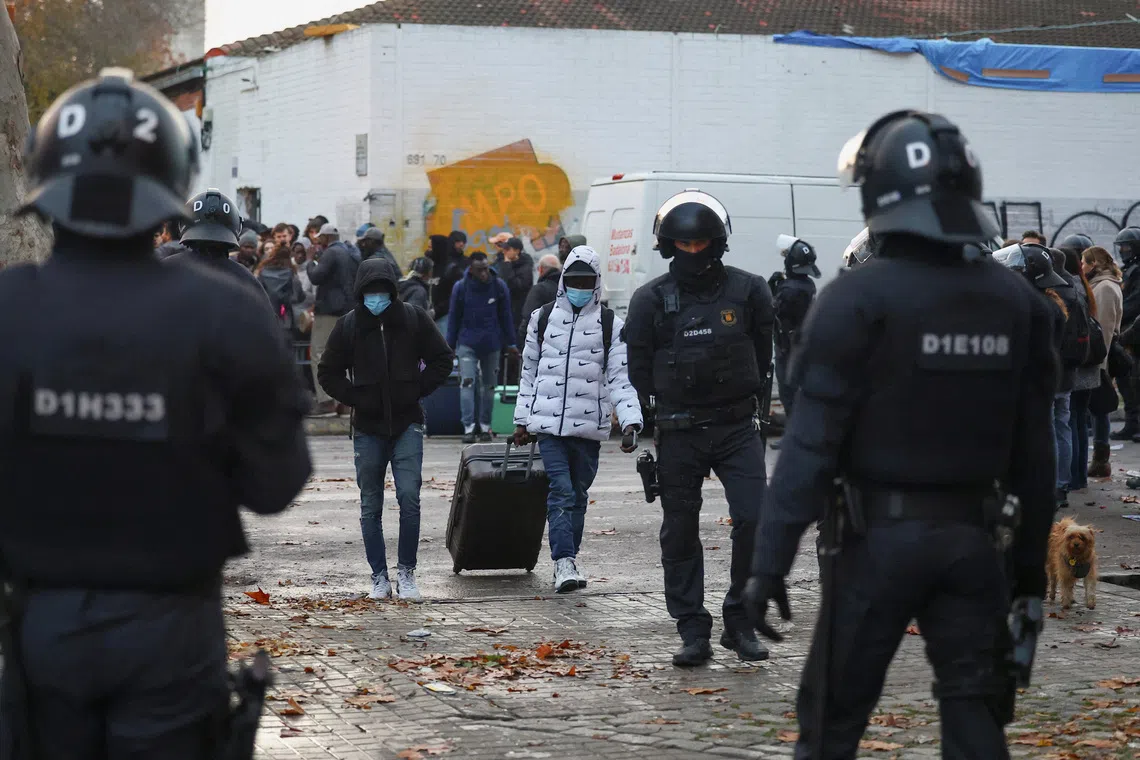
Badalona, Spain – december 17, 2023 – In a move sparking widespread controversy, Spanish police forcibly evicted approximately 400 migrants from a former high school in Badalona, a city near Barcelona, on Wednesday. This large-scale eviction, described by a local tenants’ union as the biggest of its kind in Spanish history, underscores the escalating tensions surrounding migration policy within Spain and across the European Union. But what led to this dramatic event, and what does it reveal about the broader challenges of managing migration in the 21st century?
The building, previously abandoned and occupied by squatters, was cleared on the orders of Badalona Mayor Xabier Garcia Albiol of the conservative People’s Party (PP). Albiol, a vocal critic of irregular immigration, has consistently linked it to crime and advocated for stricter deportation policies. This action directly contrasts with the more welcoming approach generally adopted by Spain’s current leftist central government, which emphasizes the economic contributions of migrants.
While authorities maintain the eviction was necessary to combat illegality and maintain public order,the reality on the ground was far more complex. Brief clashes occurred between police and activists attempting to support the migrants,but the majority left peacefully,left with nowhere to go,their belongings piled onto carts or simply sitting with them in the rain.
“Tonight our plan is to sleep in the street because we don’t know where to go,” stated Boubacar, a 25-year-old Senegalese man without documentation, highlighting the immediate and desperate situation facing those evicted. “As you can see, it’s raining right now and it’s cold, and we don’t know what to do.”
A Nation Divided: Spain’s Shifting Stance on Migration
Spain has historically been a key entry point for migrants and refugees seeking to reach Europe, particularly from Africa. In recent years, the country has seen a notable increase in arrivals, placing strain on resources and fueling political debate. While the central government acknowledges the economic benefits of immigration – a 2023 report by the Bank of Spain estimates that immigration contributes significantly to GDP growth [https://www.bde.es/wps/portal/en/servicios/publicaciones/informes/documentos-de-trabajo/2309/dt2309.pdf] - local authorities in some regions, like Badalona, are adopting a more restrictive stance.
This divergence reflects a broader trend across the EU. Countries like Italy and Germany are grappling with similar challenges, witnessing the rise of right-wing parties capitalizing on anti-immigration sentiment. The European Commission’s recent proposals for a new migration pact [https://home-affairs.ec.europa.eu/news/new-pact-migration-and-asylum_en] aim to create a more unified and effective approach to managing borders and asylum claims, but the plan remains contentious, with disagreements over burden-sharing and obligation.
The Human Cost: Beyond the Headlines
The eviction in Badalona isn’t simply a political issue; it’s a humanitarian crisis unfolding in real-time. The lack of adequate housing alternatives for those displaced is particularly concerning. This incident tragically echoes a similar event in the same city five years ago, when a fire in an industrial building housing West African migrants resulted in five deaths.
Organizations like the Spanish Red Cross [https://www.cruzroja.es/en/what-we-do/social-inclusion/migration] are working to provide emergency assistance, but the scale of the need far exceeds available resources. The long-term consequences of homelessness and displacement – including increased vulnerability to exploitation, health problems, and social exclusion – are profound.
Looking Ahead: What Solutions Exist?
addressing the challenges of migration requires a multifaceted approach that goes beyond simply tightening borders or conducting large-scale evictions. Key strategies include:
* Investing in Integration Programs: Providing language training, job skills development, and cultural orientation programs can definitely help migrants successfully integrate into Spanish society.
* Expanding Affordable Housing Options: Addressing the housing shortage, particularly in urban areas, is crucial to preventing homelessness and ensuring dignified living conditions for all residents.
* Strengthening International Cooperation: Working with countries of origin to address the root causes of migration – such as poverty, conflict, and climate change – is essential for long-term solutions.
* Regularization Pathways: Creating clear and accessible pathways to legal residency can
Keep reading