
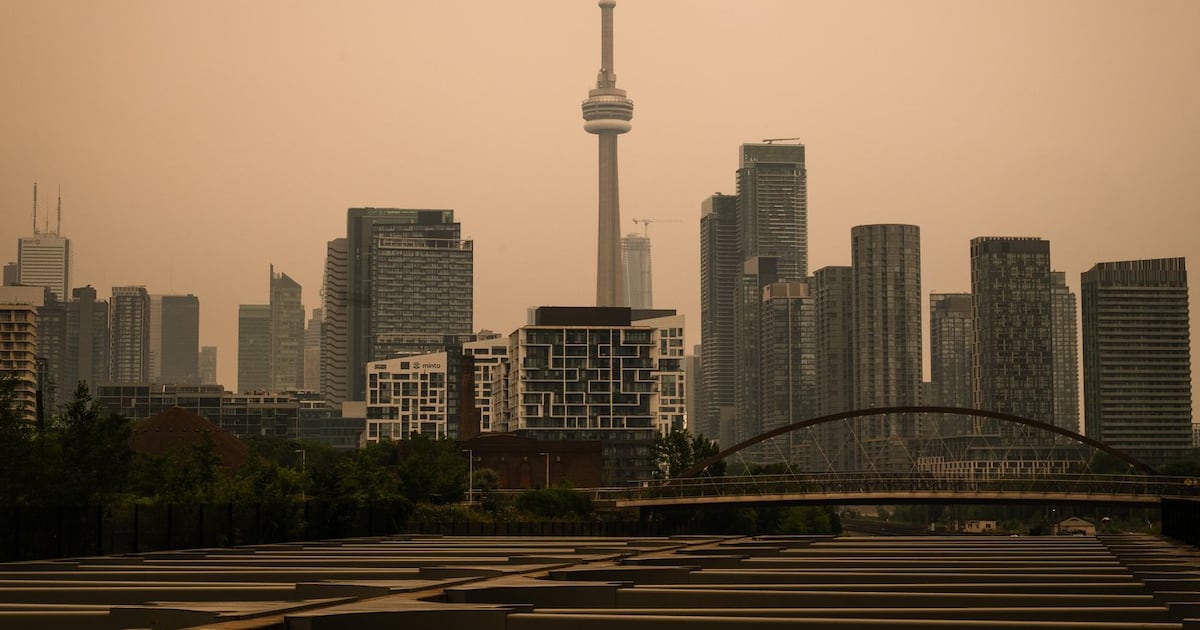
Toronto ranked as having the world’s worst air quality on Wednesday, July 15, 2026, as wildfire smoke from northwestern Ontario blanketed the city. Environment Canada issued an orange air quality warning, advising residents to limit outdoor exposure as smoke and extreme heat created hazardous conditions expected to persist until Friday.
Air Quality Rankings and Environmental Conditions
As of 10 a.m. on July 15, 2026, Toronto recorded the worst air quality globally, according to data from IQAir, a Swiss air quality technology company that operates the world’s largest real-time air quality information platform. The city’s air quality index surpassed levels in Kinshasa in the Democratic Republic of the Congo, Delhi in India, Dubai in the United Arab Emirates, and Jerusalem in Israel. The orange air quality warning, classified by Environment Canada as a high-impact tier, was issued at 8:21 a.m. to address the “very poor air quality and reduced visibility” caused by drifting smoke from large wildfires in the province’s northwest.
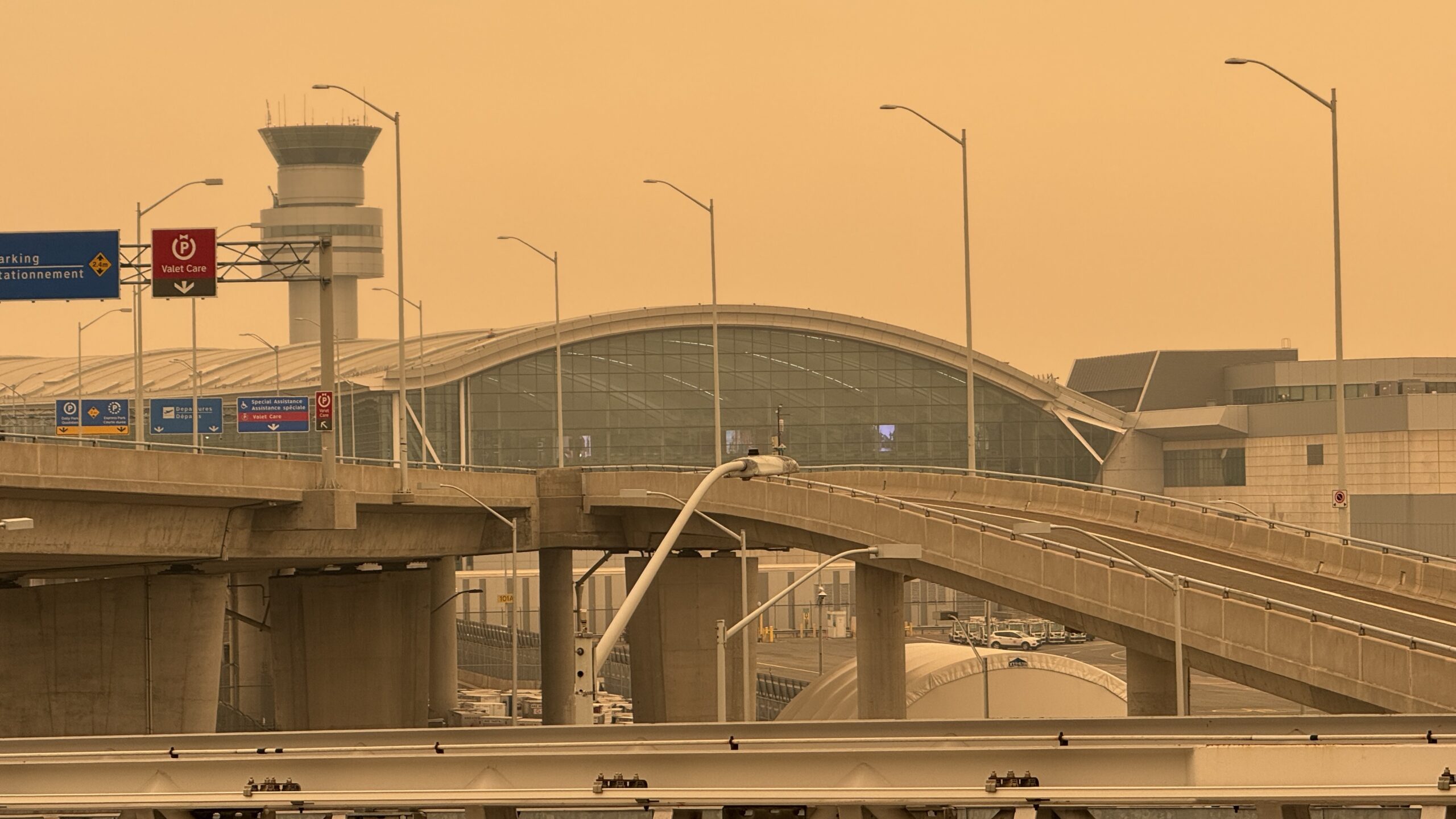
The smoke, which turned Toronto skies orange, is exacerbated by a persistent heat wave that has been in effect since Monday. The combination of dangerous heat and smoke has led to GO Transit schedule delays and health advisories across the Greater Toronto Area. Jean-Philippe Bégin, a meteorologist with the weather agency, stated that winds from the northwest will continue to blanket Toronto and southern Ontario with smoke until at least Friday. On that day, winds are expected to change direction and blow smoke north. While this shift could bring relief to southern Ontarians by the end of the week, Bégin noted it would put communities north of the fires in the crosshairs.
Health Risks and Official Guidance
Environment Canada has warned that the air quality poses risks to all residents, regardless of age or medical history. The agency advises Canadians to prioritize keeping cool inside and to limit time outdoors. The agency outlines specific symptoms and precautions for those exposed to the smoke.
“You may experience mild and common symptoms such as eye, nose and throat irritation, headaches or a mild cough. More serious but less common symptoms include wheezing, chest pains or severe cough. If you think you are having a medical emergency, seek immediate medical assistance,” Environment Canada stated.
Vulnerable groups—including infants, young children, pregnant people, those aged 65 and older, people with an existing illness or chronic health condition, and people who work outdoors—are advised to avoid strenuous outdoor activities and seek medical attention if experiencing symptoms. According to The Canadian Press, these warnings extend beyond Toronto, covering a vast region from Thunder Bay to Kingston and down to London, as several First Nations communities in northwestern Ontario face mandatory evacuation orders due to the forest fires.
Forecasted Timeline and Weather Shifts
Conditions are expected to deteriorate throughout the day on Wednesday as the city grapples with both heat and particulate matter. Environment Canada reports that maximum temperatures of 30 to 36 C are expected on Wednesday. The risk level is projected to climb steadily, reaching the “very high” category by the evening.
According to Environment Canada, risk levels rise from moderate late Wednesday morning to high by late afternoon. By 8 p.m., the risk reaches 8–10, which is considered high. From 9 p.m. onward, levels exceed 10+, classified as very high, and remain elevated overnight into early Thursday. The agency says conditions may improve by Friday morning.
Find more reporting in our News section.
Related reading