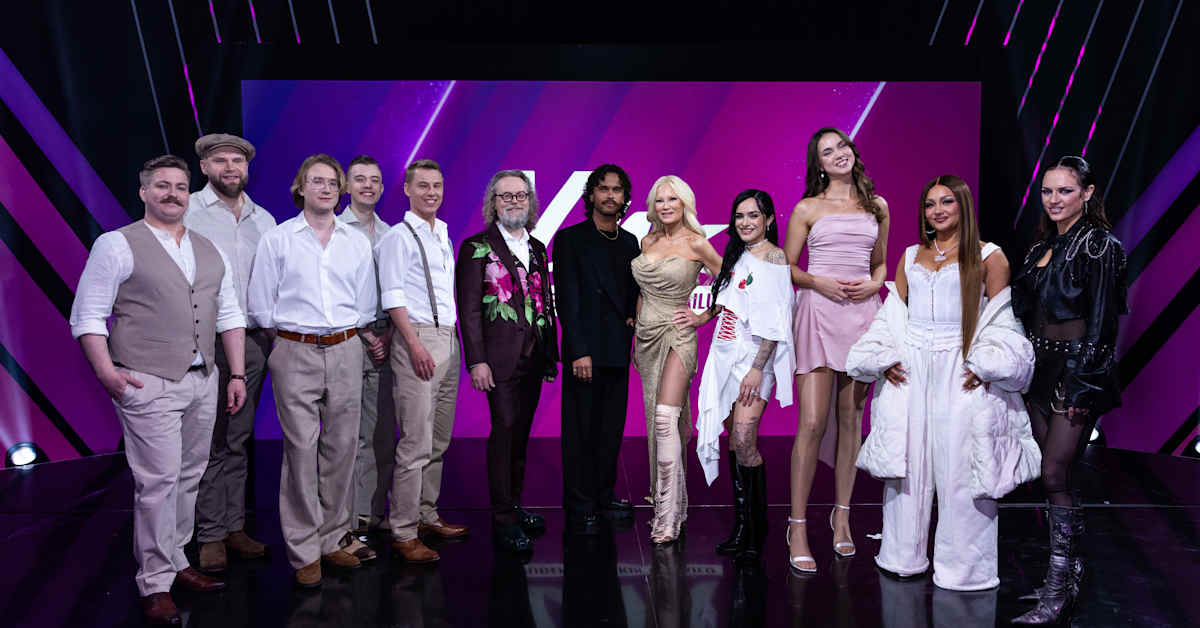
Tampere, Finland – The stage is set for the grand finale of Uuden Musiikin Kilpailu (UMK), Finland’s national selection for the Eurovision Song Contest, and one duo has already captured the nation’s attention – and the bookmakers’ favor. Linda Lampenius, a renowned violinist, and Pete Parkkonen, a celebrated singer-songwriter, have confirmed their commitment to representing Finland at the 2026 Eurovision Song Contest in Vienna, should they emerge victorious this evening. This announcement, made via Instagram, marks a shift from their earlier cautious stance regarding participation, and comes alongside a strong condemnation of Israel’s continued participation in the competition.
The pair’s entry, “Liekinheitin” (Finnish for “Flamethrower”), has quickly become a frontrunner, dominating both streaming charts and public discourse. As of today, February 28, 2026, the music video for “Liekinheitin” has garnered over two million views on YouTube, and the song itself has amassed three and a half million streams on Spotify, according to reports from Finnish media outlet Yle. Yle’s analysis suggests that Lampenius and Parkkonen’s dominance has somewhat diminished the excitement surrounding the competition, with other contestants appearing less confident in their chances.
A Late Commitment and a Principled Stand
Initially, Lampenius and Parkkonen had remained circumspect about their willingness to travel to Vienna should they win UMK. This hesitation stemmed, in part, from growing international concerns surrounding Israel’s participation in the Eurovision Song Contest, given the ongoing conflict in Gaza. However, in a post on Instagram, the duo declared their intention to compete, framing their potential participation as a commitment to “music and humanity.”
“Tonight we are competing for the victory of UMK. If we are given the honor to represent Finland in the Eurovision Song Contest, we will do so for the sake of music and humanity,” they wrote. This statement is a significant development, as Antti Paalanen was previously the only UMK finalist to unequivocally state his willingness to participate in Eurovision regardless of the circumstances. Yle reported that Paalanen had expressed this commitment from the outset of the competition.
Despite their decision to compete, Lampenius and Parkkonen have not shied away from expressing their disapproval of Israel’s inclusion in the contest. They explicitly stated their belief that allowing Israel to participate is “wrong,” and condemned the events unfolding in Palestine as “inhumane and reprehensible.” This stance reflects a growing wave of calls for a boycott of the Eurovision Song Contest, fueled by concerns over human rights and the ongoing conflict.
“Liekinheitin”: A Commercial and Critical Success
“Liekinheitin” was released on January 16, 2026, through Universal Music Oy and PME Records. According to Wikipedia, the song was composed by Lampenius and Parkkonen, in collaboration with Antti Riihimäki, Lauri Halavaara, and Vilma Alina Lähteenmäki. The song quickly ascended to the top of the Official Finnish Singles Chart, demonstrating its immediate appeal to the Finnish public.
The song’s success is particularly noteworthy given the strong field of competitors in this year’s UMK. The collaboration between Lampenius and Parkkonen reportedly began when Riihimäki contacted Parkkonen during a performance break. At the time, Lampenius was already working on the song’s structure with Riihimäki, Lähteenmäki, and Halavaara. The production team carefully evaluated potential collaborators before settling on Parkkonen, recognizing his ability to complement Lampenius’s artistic vision.
Thematically, “Liekinheitin” explores the complexities of a relationship characterized by intense passion and emotional volatility. Lampenius has described the lyrics as portraying someone who is “burning hot but suddenly turns ice cold,” capturing the push and pull of a fiery yet fragile connection. The song’s dramatic arrangement and powerful vocals further amplify this emotional intensity.
The Broader Context: Finland and the Eurovision Song Contest
Finland has a long and storied history with the Eurovision Song Contest, dating back to its debut in 1965. Even as the country has consistently participated, success has been limited until recently. In 2023, Käärijä achieved a remarkable second-place finish with his song “Cha Cha Cha,” marking Finland’s best result in the contest’s history. This success has undoubtedly raised expectations for Finnish entries in subsequent years, and has contributed to the heightened anticipation surrounding UMK 2026.
The Uuden Musiikin Kilpailu serves as Finland’s national selection process for the Eurovision Song Contest. The competition typically involves a series of televised heats, culminating in a grand final where the winning song is chosen by a combination of public voting and jury deliberation. The winner then goes on to represent Finland at the Eurovision Song Contest, held annually in a different European city.
This year’s contest is scheduled to take place in Vienna, Austria, in May 2026. The city was selected as the host after the 2025 contest, originally planned for Malmö, Sweden, faced logistical challenges. Vienna has previously hosted the Eurovision Song Contest in 1967 and 1974, and is well-equipped to handle the demands of this large-scale international event.
The Impact of Political Considerations
The decision to allow Israel to participate in the 2026 Eurovision Song Contest has sparked considerable controversy, with calls for a boycott growing louder in recent weeks. Critics argue that allowing Israel to compete while the conflict in Gaza continues sends a message of indifference to the suffering of Palestinians. Protests have been organized in several European cities, and numerous artists have publicly called for Israel’s exclusion from the competition.
The European Broadcasting Union (EBU), the organization responsible for overseeing the Eurovision Song Contest, has defended its decision, stating that the contest is a non-political event and that all member broadcasters are entitled to participate. However, this stance has been met with skepticism by many, who argue that the contest is inherently political, given its role in promoting cultural exchange and fostering international relations.
The controversy surrounding Israel’s participation has forced contestants and broadcasters to grapple with tough ethical questions. Lampenius and Parkkonen’s decision to condemn Israel’s participation while simultaneously committing to compete highlights the complexities of this situation. Their stance reflects a growing trend among artists who are willing to use their platform to advocate for social and political causes.
The outcome of tonight’s UMK final will not only determine Finland’s representative at the Eurovision Song Contest, but will also serve as a barometer of public sentiment regarding the broader political issues surrounding the event. With Lampenius and Parkkonen as clear favorites, it remains to be seen whether their principled stand will resonate with voters and propel them to victory.
As the UMK finale approaches, all eyes are on Tampere. The next step will be the official announcement of the winner and their subsequent preparations for the Eurovision Song Contest in Vienna. The competition promises to be a captivating spectacle, both musically and politically. We encourage readers to share their thoughts and predictions in the comments below.