In the high-stakes architecture of global security, few entities carry as much weight—or face as much scrutiny—as the United States European Command. Based in the heart of Germany, this unified combatant command serves as the primary nerve center for U.S. Military operations, diplomacy, and strategic deterrence across the European continent and beyond.
As the geopolitical landscape shifted violently following the 2022 invasion of Ukraine, the role of the United States European Command has evolved from a posture of reassurance to one of active, high-readiness deterrence. For the global community, the command is not merely a military headquarters; it is the operational bridge that links the United States to the North Atlantic Treaty Organization (NATO) and its European allies, ensuring that the transatlantic bond remains a functional reality rather than a diplomatic formality.
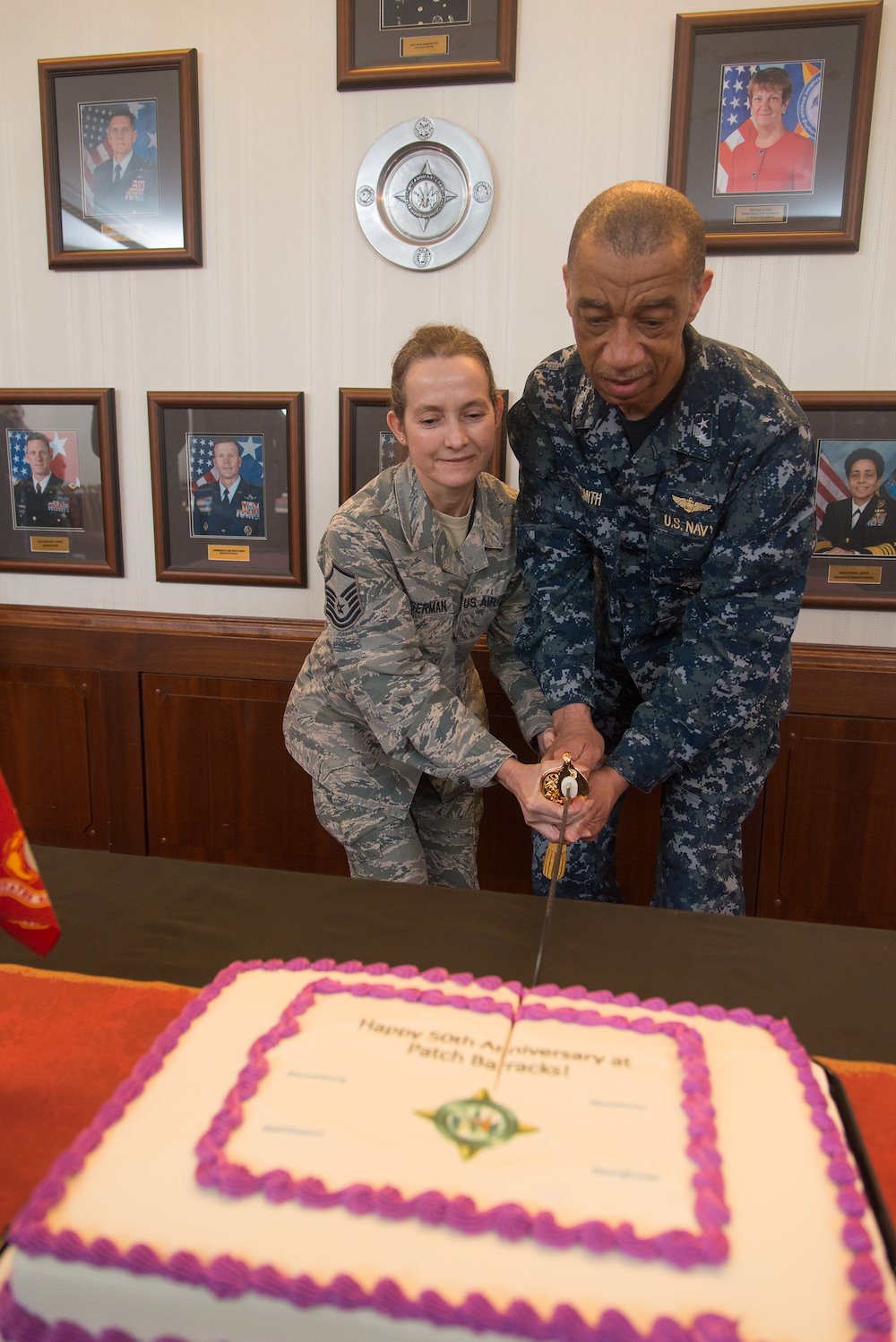
Operating from its headquarters at Patch Barracks in Stuttgart, the command manages a vast area of responsibility that encompasses Europe, Russia, and parts of Asia. Its mission is defined by a complex duality: maintaining the capability to conduct large-scale combat operations if necessary, while simultaneously leading the security cooperation efforts that prevent such conflicts from erupting.
The Strategic Mandate of the United States European Command
The United States European Command, often referred to as USEUCOM, is one of the eleven unified combatant commands of the U.S. Department of Defense. Unlike the traditional army or navy structures, a combatant command is a functional organization that integrates all branches of the military—Army, Navy, Air Force, Marine Corps, and Space Force—to achieve specific regional goals.
The core mission of the command is to deter aggression, promote stability, and build partnerships
across its area of responsibility. This involves a constant cycle of military exercises, intelligence sharing, and the deployment of rotational forces to key strategic points, particularly along the Eastern Flank of NATO.
A critical component of this mandate is the coordination of security assistance. USEUCOM does not simply station troops; it manages the flow of equipment, training, and tactical advice to partner nations. This capability became the backbone of the international response to Russian aggression, as the command facilitated the rapid movement of assets and the synchronization of allied defenses across Poland, Romania, and the Baltic states.
The NATO Synergy and the SACEUR Relationship
To understand the United States European Command, one must understand its intricate relationship with NATO. While USEUCOM is a U.S. Government entity reporting to the Secretary of Defense and the President, it works in lockstep with the Supreme Allied Commander Europe (SACEUR), the top military authority within NATO.
This dual-hatted nature of U.S. Involvement in Europe ensures that American national interests are aligned with the collective defense obligations of the NATO alliance. When NATO activates a defense plan or increases its Enhanced Forward Presence (eFP), USEUCOM provides the logistical muscle and strategic planning necessary to make those movements possible.
The synergy between these two entities is most visible during large-scale exercises, such as the Defender series. These maneuvers are designed to test the ability of the U.S. And its allies to move thousands of troops and pieces of equipment across borders in a matter of days—a logistical feat that serves as a visible deterrent to potential adversaries.
Modern Challenges: The Shift to the Eastern Flank
The strategic center of gravity for the United States European Command has migrated eastward over the last several years. The “Eastern Flank”—comprising nations such as Estonia, Latvia, Lithuania, and Poland—has become the primary focus of U.S. Military readiness in Europe.
This shift is driven by the necessity of tripwire deterrence
, where the presence of U.S. Forces ensures that any aggression against a NATO ally would immediately involve the United States, thereby triggering the collective defense clause of Article 5. The command has overseen the transition from small, rotational batches of soldiers to more robust, persistent presences in these regions.
the integration of new NATO members, specifically Finland and Sweden, has fundamentally altered the map for USEUCOM. The addition of Finland, in particular, has provided the command with significantly more strategic depth and access to the Arctic region, a growing area of competition between the U.S., Russia, and China.
According to official guidance from the U.S. European Command, the focus remains on maintaining a credible and capable
force that can adapt to “gray zone” warfare—attacks that fall below the threshold of open conflict, such as cyberattacks and disinformation campaigns.
Logistics and the Role of Patch Barracks
While the soldiers on the front lines gain the most attention, the operational heart of the command beats in Stuttgart, Germany. Patch Barracks serves as the command-and-control center where generals, intelligence analysts, and diplomats coordinate the movement of forces across an entire continent.
The logistics of maintaining a military presence in Europe are staggering. USEUCOM manages a network of airbases, ports, and prepositioned stock piles (APS). These stockpiles allow the U.S. To move personnel into a region and immediately equip them with heavy armor and artillery, bypassing the weeks it would take to ship such equipment across the Atlantic.
This logistical infrastructure is not just about war-fighting; it is about stability. By maintaining a permanent and visible footprint, the United States signals a long-term commitment to European security, providing a psychological anchor for allies who may feel vulnerable to regional pressures.
Key Operational Pillars of USEUCOM
| Pillar | Primary Objective | Key Activity |
|---|---|---|
| Deterrence | Preventing conflict through strength | Rotational troop deployments and high-visibility exercises |
| Partnership | Building allied military capacity | Joint training and security cooperation programs |
| Readiness | Ensuring rapid response capability | Logistics optimization and prepositioned equipment |
| Interoperability | Seamless cooperation with NATO | Standardizing communication and tactical protocols |
Who is Affected by USEUCOM Operations?
The impact of the United States European Command extends far beyond the military personnel in uniform. Its operations affect millions of civilians across the continent in several ways:
- Host Nations: Countries like Germany, Italy, and Poland host U.S. Bases, which brings significant economic activity to local communities but likewise requires complex diplomatic negotiations regarding sovereign land and legal jurisdictions.
- NATO Allies: Smaller nations in Eastern Europe rely on the security umbrella provided by USEUCOM to maintain political stability and economic growth without having to dedicate an unsustainable percentage of their GDP to defense.
- Global Markets: Because European stability is tied to global trade, the deterrence provided by USEUCOM helps prevent the kind of large-scale instability that could crash energy markets or disrupt shipping lanes in the North Sea and Mediterranean.
The Path Forward: Security in an Uncertain Era
As we move further into 2026, the United States European Command faces a landscape defined by “permanent competition.” The era of post-Cold War peace has been replaced by a period of strategic rivalry where the lines between peace and conflict are increasingly blurred.
The command’s future will likely be defined by three major trends: the further integration of Arctic security, the continued modernization of NATO’s command structure, and the adaptation to unmanned systems and AI-driven warfare. The ability of USEUCOM to integrate these technologies while maintaining the human relationships that underpin the NATO alliance will be the true measure of its success.
For the average citizen, the perform of the United States European Command is often invisible—occurring in secure rooms in Stuttgart or during midnight drills in the forests of Poland. However, the absence of large-scale conflict in Europe is the most potent evidence of the command’s effectiveness.
The next major checkpoint for the command’s strategic alignment will be the upcoming scheduled NATO summit, where member states will review defense spending targets and the updated posture for the Eastern Flank. Official updates regarding troop rotations and exercise schedules are typically released through the U.S. Department of Defense news portal.
Do you believe the current U.S. Military posture in Europe is sufficient for long-term stability? We invite our readers to share their perspectives in the comments below.
Worth a look