Super Bowl LXI, held in Santa Clara, California, saw Verizon deliver the best 5G performance for attendees, according to recent data from Ookla. The report highlights significant network enhancements made in readiness for the Super Bowl and the upcoming 2026 FIFA World Cup.
Verizon Leads in 5G Performance at Super Bowl LXI
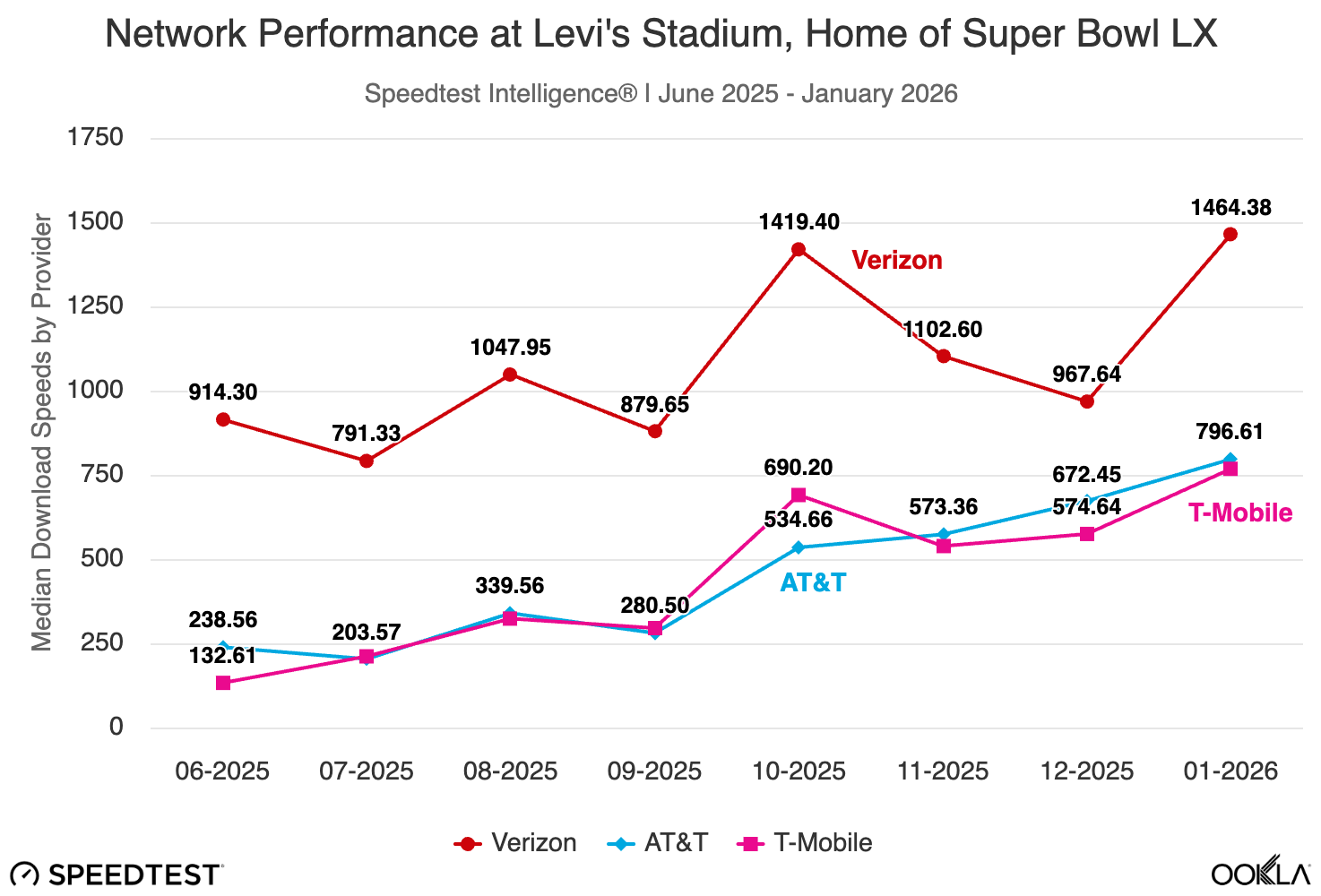
Ookla’s Speedtest Intelligence data revealed that Verizon customers attending Super Bowl LXI experienced substantially faster download speeds compared to those on T-Mobile and AT&T. Verizon achieved a median download speed of 1464 Mbps,nearly double that of T-Mobile’s 768 Mbps. AT&T recorded a median download speed of 797 Mbps, slightly ahead of T-Mobile. Droid Life initially reported on these findings.
Stadium Infrastructure Enhancements
The improved network performance is largely attributed to considerable upgrades to Levi’s Stadium’s Distributed Antenna System (DAS). These upgrades were implemented in anticipation of hosting both super bowl LXI and matches for the 2026 FIFA World Cup.Verizon specifically bolstered its network with the deployment of additional millimeter wave (mmWave) and C-band antennas throughout the stadium and surrounding parking areas. DAS systems improve coverage and capacity by strategically placing antennas throughout a venue, minimizing interference and maximizing signal strength.
Key Takeaways
- Verizon led in 5G performance: Verizon provided the fastest median download speeds at Super Bowl LXI, reaching 1464 Mbps.
- Significant infrastructure investment: Levi’s Stadium underwent substantial upgrades to its DAS to support large events.
- mmWave and C-band deployments: Verizon’s enhancements included the strategic placement of mmWave and C-band antennas.
- improved fan experience: These network improvements aimed to enhance the connectivity experience for attendees.
As major events continue to draw large crowds, robust and reliable network infrastructure becomes increasingly critical. The success of Verizon’s network performance at Super Bowl LXI demonstrates the importance of proactive investment in network capacity and technology to meet the demands of high-density environments. Future events will likely see continued competition among carriers to deliver the best possible connectivity experience for attendees.
Related reading