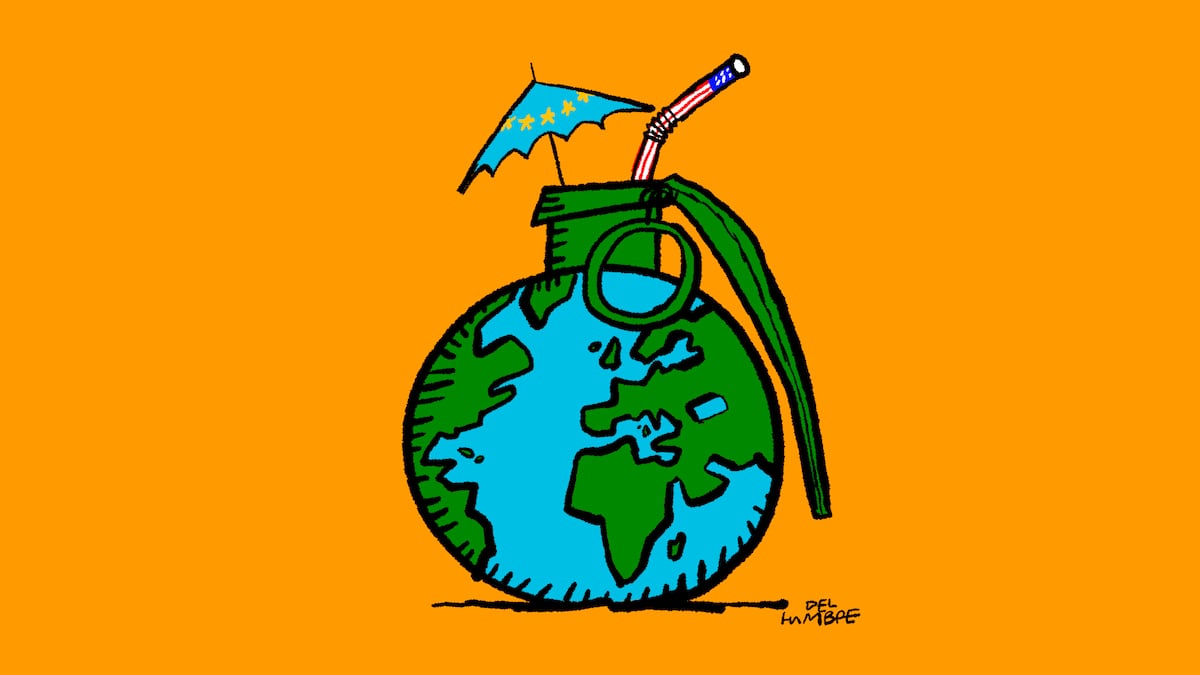
London, United Kingdom – European Commission President Ursula von der Leyen’s recent assertion that the European Union “can no longer be the guardian of the aged world order” has sparked debate and concern across the continent and beyond. Delivered at the EU Ambassadors’ Conference 2026, the statement, initially reported by Spanish newspaper El País on March 9th, signals a potential shift in the EU’s approach to global affairs, moving away from a commitment to established international norms and towards a more pragmatic and some argue, ethically ambiguous foreign policy. This evolving stance comes at a time of increasing geopolitical instability, marked by conflicts in multiple regions and a rising tide of nationalism, prompting questions about the future of multilateralism and the role of Europe on the world stage.
Von der Leyen framed her comments not as a deliberate abandonment of principles, but as a realistic assessment of a changing world. However, critics argue that this rhetoric risks normalizing actions that would previously have been considered unacceptable, effectively eroding the foundations of international law and cooperation. The core of the concern lies in the suggestion that “circumstances” can justify deviations from established ethical and legal frameworks, a position that echoes the tenets of realpolitik – a system of politics based on practical considerations rather than ideological ones. This approach, while potentially offering short-term advantages, raises fundamental questions about the long-term consequences for global stability and the credibility of European leadership.
The Shifting Sands of Global Order
The context for von der Leyen’s statement is a world undergoing rapid and profound transformation. The war in Ukraine, ongoing conflicts in the Middle East, and rising tensions in the Indo-Pacific region have all contributed to a sense of instability and uncertainty. The rise of China as a global power and the increasingly assertive foreign policy of Russia have challenged the existing US-led international order. These developments have led to a reassessment of traditional alliances and a growing recognition that the “old rules” may no longer be sufficient to address the challenges of the 21st century. The European Union, grappling with internal divisions and economic challenges, finds itself at a critical juncture, attempting to define its role in this new geopolitical landscape.
The assertion that Europe can no longer act as a “guardian” of the old order is particularly striking given the EU’s historical commitment to multilateralism and the rule of law. Since its inception, the EU has championed international cooperation, human rights, and democratic values. However, the recent emphasis on “realism” suggests a willingness to prioritize national interests and pragmatic considerations over these principles. This shift is further complicated by the internal dynamics within the EU, where member states often have diverging foreign policy priorities. The rise of populist and nationalist movements in several European countries has similarly contributed to a more inward-looking and skeptical approach to international affairs.
Von der Leyen and the Specter of Pragmatism
The contrast drawn by commentators between von der Leyen’s approach and that of former US President Donald Trump is particularly insightful. While Trump openly challenged the existing international order and embraced a transactional approach to foreign policy, von der Leyen presents a more subtle, yet potentially equally damaging, shift. Trump’s actions were often characterized by a deliberate disruption of established norms, whereas von der Leyen frames her approach as a necessary adaptation to changing circumstances. As noted in reports from March 11th, 2026, this difference in presentation is crucial, as it allows for the erosion of principles to be disguised as pragmatic necessity.
This emphasis on pragmatism is particularly concerning in the context of the ongoing conflict in Iran. Von der Leyen’s reported suggestion that it is unproductive to debate whether a war in Iran is “chosen or necessary” – a point highlighted by El País – represents a dangerous disregard for the principles of international law and the responsibility to prevent aggression. Distinguishing between a war of choice and a war of self-defense is fundamental to the legal and moral framework governing international relations. To dismiss this distinction as irrelevant is to effectively endorse the idea that might makes right, undermining the very foundations of the post-World War II international order. The principles of international law, developed over seventy years, emphasize the importance of legitimate defense and condemn unprovoked aggression.
The Erosion of Ethical Boundaries
The danger, as articulated by analysts, lies in the normalization of ethical compromises. When abandoning principles is presented not as a difficult exception but as mere common sense, the damage becomes invisible. This creates a slippery slope where any action can be justified in the name of “realism,” leading to a gradual erosion of moral boundaries. The acceptance of necessity as a justification for abandoning principles removes any internal check on political action, potentially leading to a cycle of escalating compromises and a loss of moral authority.
The concern is not simply about the specific actions taken, but about the mindset that underpins them. If leaders no longer perceive their hands as “dirty” when compromising on fundamental principles, they are more likely to repeat such compromises in the future. This can lead to a situation where ethical considerations are consistently subordinated to short-term political gains, ultimately undermining the long-term interests of both Europe and the international community. The willingness to accept the conditions imposed by adversaries, rather than actively defending the existing order, represents a profound abdication of leadership.
Implications for European Security and Global Stability
The implications of this shift in European policy are far-reaching. A weakening of the EU’s commitment to international law and human rights could embolden authoritarian regimes and undermine efforts to promote democracy and stability around the world. It could also lead to a fragmentation of the international system, as countries increasingly prioritize their own narrow interests over collective security. The potential for increased conflict and instability is particularly acute in regions already grappling with political and economic challenges.
the erosion of European leadership could create a vacuum that is filled by other actors, such as China or Russia, who may not share the same commitment to democratic values and the rule of law. This could lead to a more polarized and dangerous world, where the principles of multilateralism and cooperation are increasingly marginalized. The future of the transatlantic alliance, already strained by recent political developments, could also be jeopardized if Europe is perceived as abandoning its commitment to shared values and strategic interests.
The situation is further complicated by the ongoing debate surrounding European defense capabilities. While there is a growing recognition of the require for Europe to take greater responsibility for its own security, there is also disagreement over the best way to achieve this. Some advocate for closer cooperation with NATO, while others argue for the development of a more independent European defense policy. Von der Leyen’s recent statements suggest a willingness to prioritize pragmatic considerations over ideological commitments, potentially leading to a more flexible and adaptable, but also potentially less principled, approach to European security.
As reported by Euronews on March 10th, 2026, von der Leyen’s comments have ignited a debate about the future of Europe’s role in the world. The question now is whether the EU will reaffirm its commitment to the principles that have underpinned its success for decades, or whether it will succumb to the siren song of pragmatism and abandon its role as a guardian of the international order. The answer to this question will have profound implications for the future of Europe and the world.
Key Takeaways
- Ursula von der Leyen has signaled a potential shift in EU foreign policy, prioritizing pragmatism over strict adherence to international norms.
- This shift is driven by a perception that the existing “old world order” is unsustainable in the face of growing geopolitical instability.
- Critics argue that this approach risks eroding the foundations of international law and undermining the EU’s moral authority.
- The implications of this shift are far-reaching, potentially leading to a more fragmented and dangerous world.
- The debate over Europe’s role in the world is likely to intensify in the coming months, with significant implications for the future of the transatlantic alliance and global stability.
Looking ahead, the European Council meeting scheduled for June 2026 will be a crucial moment for determining the EU’s future direction. Discussions are expected to focus on the implementation of the new security strategy outlined by von der Leyen, as well as the broader implications of her recent statements. The outcome of this meeting will provide a clearer indication of whether the EU is truly prepared to abandon its traditional role as a guardian of the international order. We encourage readers to share their thoughts and perspectives on this critical issue in the comments below.