A recent frontier in the fight against high cholesterol and triglycerides is emerging with the development of zodasiran, a precision medicine designed to silence a specific protein in the liver. In a recently reported phase 1 basket trial, zodasiran for cholesterol and triglyceride lowering showed significant promise in reducing lipid levels for patients struggling with severe dyslipidemias, including those with genetic predispositions.
The therapy utilizes small interfering RNA (siRNA) to target angiopoietin-like protein 3 (ANGPTL3), a protein that normally inhibits the breakdown of triglycerides and the clearance of low-density lipoprotein (LDL) cholesterol. By blocking the expression of this protein, zodasiran effectively “unlocks” the body’s ability to clear harmful fats from the bloodstream, mimicking a natural genetic advantage found in some individuals with loss-of-function variants in the ANGPTL3 gene.
For patients with familial hypercholesterolemia or severe hypertriglyceridemia, who often find standard statin therapies insufficient, these results represent a potential shift toward more durable, long-term management. The trial focused on safety and dose-finding, demonstrating that the drug can achieve robust lipid reductions without the serious treatment-related adverse events that often plague early-stage pharmaceutical trials.
The Science of RNA Interference and ANGPTL3
To understand why zodasiran is significant, one must first understand the role of ANGPTL3. This protein is produced in the liver and acts as a regulator of lipid metabolism. When ANGPTL3 is active, it prevents certain enzymes from breaking down triglycerides and slows the removal of LDL cholesterol—the “bad” cholesterol—from the blood. People born with natural mutations that disable ANGPTL3 typically have much lower levels of these lipids and a significantly reduced risk of cardiovascular disease according to research published in Nature.
Zodasiran is an RNA interference (RNAi) therapy, a technology that allows scientists to “silence” specific genes. Rather than treating the symptoms of high cholesterol, zodasiran targets the source by preventing the liver from producing the ANGPTL3 protein in the first place as detailed in the New England Journal of Medicine. This approach allows for a potent, long-lasting effect with infrequent dosing.
Trial Design and Patient Cohorts
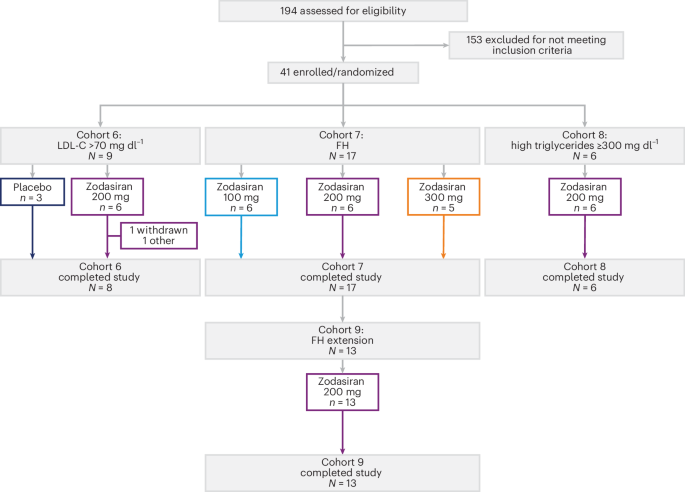
The phase 1 basket trial (ClinicalTrials.gov registration: NCT03747224) was designed to test the drug across different types of lipid disorders simultaneously. The study included three distinct groups of patients who were already receiving lipid-lowering therapies:
- Hyperlipidemia: A group of 9 patients (7 male, 2 female), which included a placebo control arm.
- Familial Hypercholesterolemia: A group of 17 patients (9 male, 8 female).
- Moderate-to-Severe Hypertriglyceridemia: A group of 6 patients (4 male, 2 female).
Participants received zodasiran via subcutaneous injections on day 1 and day 29. Following the initial 16-week trial, a subset of 13 patients (7 male, 6 female) from the familial hypercholesterolemia cohort entered a 48-week open-label extension, where the drug was administered every 12 weeks per the trial data.
Key Findings: Lipid Reduction and Efficacy
The primary goal of the trial was safety, but the secondary endpoints revealed substantial efficacy in lowering serum lipids. By week 16—which was 12 weeks after the final initial dose—all cohorts experienced significant reductions in both the target protein and harmful lipids.
The data indicated that serum ANGPTL3 levels were reduced by up to 85.4%, whereas triglycerides were lowered by up to 67.1% as reported in the trial results. These reductions were not temporary; in the familial hypercholesterolemia cohort, the suppression of ANGPTL3 was sustained through the end of the 48-week open-label extension.
zodasiran showed particular strength in treating the most severe forms of genetic cholesterol disorders. In patients with homozygous familial hypercholesterolemia (HoFH), zodasiran provided LDL cholesterol reductions of approximately 40% when added to the maximally tolerated standard-of-care therapies according to a study in The Lancet.
Summary of Clinical Impact
| Marker | Observed Reduction (up to) | Patient Population |
|---|---|---|
| Serum ANGPTL3 | 85.4% | All Cohorts [1] |
| Triglycerides | 67.1% | All Cohorts [1] |
| LDL Cholesterol | ~40% | HoFH Patients [3] |
Safety Profile and Tolerability
One of the most critical aspects of this phase 1 trial was the safety profile. The primary endpoint—the observation of serious treatment-related adverse events—was met successfully, as no such events were reported per the Nature report.
Medical researchers specifically monitored for common side effects associated with liver-targeted therapies. The trial reported no elevations in hepatic aminotransferases (liver enzymes) or bilirubin, suggesting the drug is well-tolerated by the liver. There were no observed increases in glycated hemoglobin, indicating that the therapy did not negatively impact blood glucose levels. Notably, there were no drug discontinuations during the study period according to the trial’s final report.
What In other words for the Future of Dyslipidemia Treatment
For the broader medical community, the success of zodasiran highlights the potential of RNAi therapeutics to treat a wide spectrum of dyslipidemias. Traditional treatments, such as statins or PCSK9 inhibitors, are effective for many but leave a gap for patients with severe genetic conditions like homozygous familial hypercholesterolemia or severe hypertriglyceridemia.
The ability to deliver a subcutaneous injection every few months—rather than daily medication—could significantly improve patient adherence and quality of life. By targeting the ANGPTL3 pathway, zodasiran offers a mechanism of action that is complementary to existing therapies, allowing physicians to “stack” treatments to reach target LDL and triglyceride levels in high-risk patients.
While these results are highly encouraging, We see important to remember that a phase 1 trial is primarily focused on safety and dosage in a small group. Larger, phase 2 and phase 3 trials will be necessary to confirm these findings across a more diverse global population and to determine the long-term cardiovascular outcomes, such as the reduction of heart attacks, and strokes.
Key Takeaways for Patients and Providers
- Targeted Action: Zodasiran uses siRNA to silence the ANGPTL3 protein in the liver, reducing the production of fats in the blood.
- Broad Application: The drug showed efficacy in patients with hyperlipidemia, familial hypercholesterolemia, and severe hypertriglyceridemia.
- Significant Reductions: Trial data showed reductions in ANGPTL3 of up to 85.4% and triglycerides of up to 67.1% per Nature.
- Strong Safety: No serious treatment-related adverse events or liver enzyme elevations were observed in the phase 1 cohort.
- Complementary Therapy: It may be used alongside standard-of-care lipid-lowering drugs to achieve better results in severe cases.
The next confirmed step for zodasiran involves further studies to explore its efficacy across a wider spectrum of dyslipidemias and to establish the definitive long-term dosing schedule. As these trials progress, the medical community will be watching closely to witness if this RNAi approach becomes a gold standard for those who have previously failed traditional lipid-lowering therapies.
Do you or a loved one manage a genetic lipid disorder? We invite you to share your experiences with current therapies or your thoughts on these new medical innovations in the comments below.